
Quality Policy & Environmental Policy
Certificates
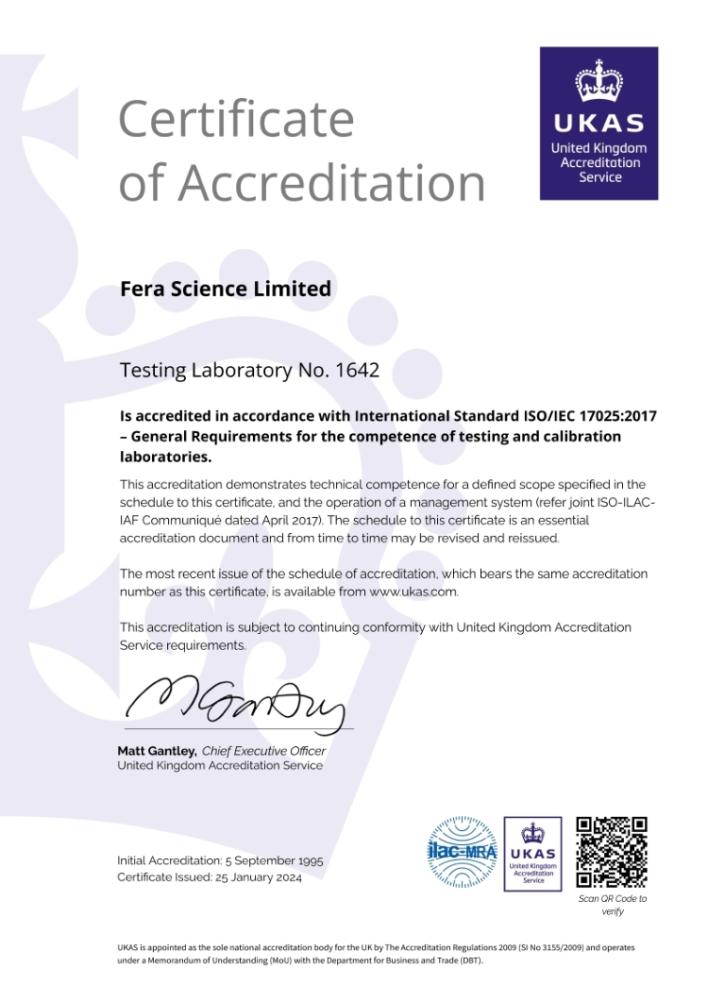
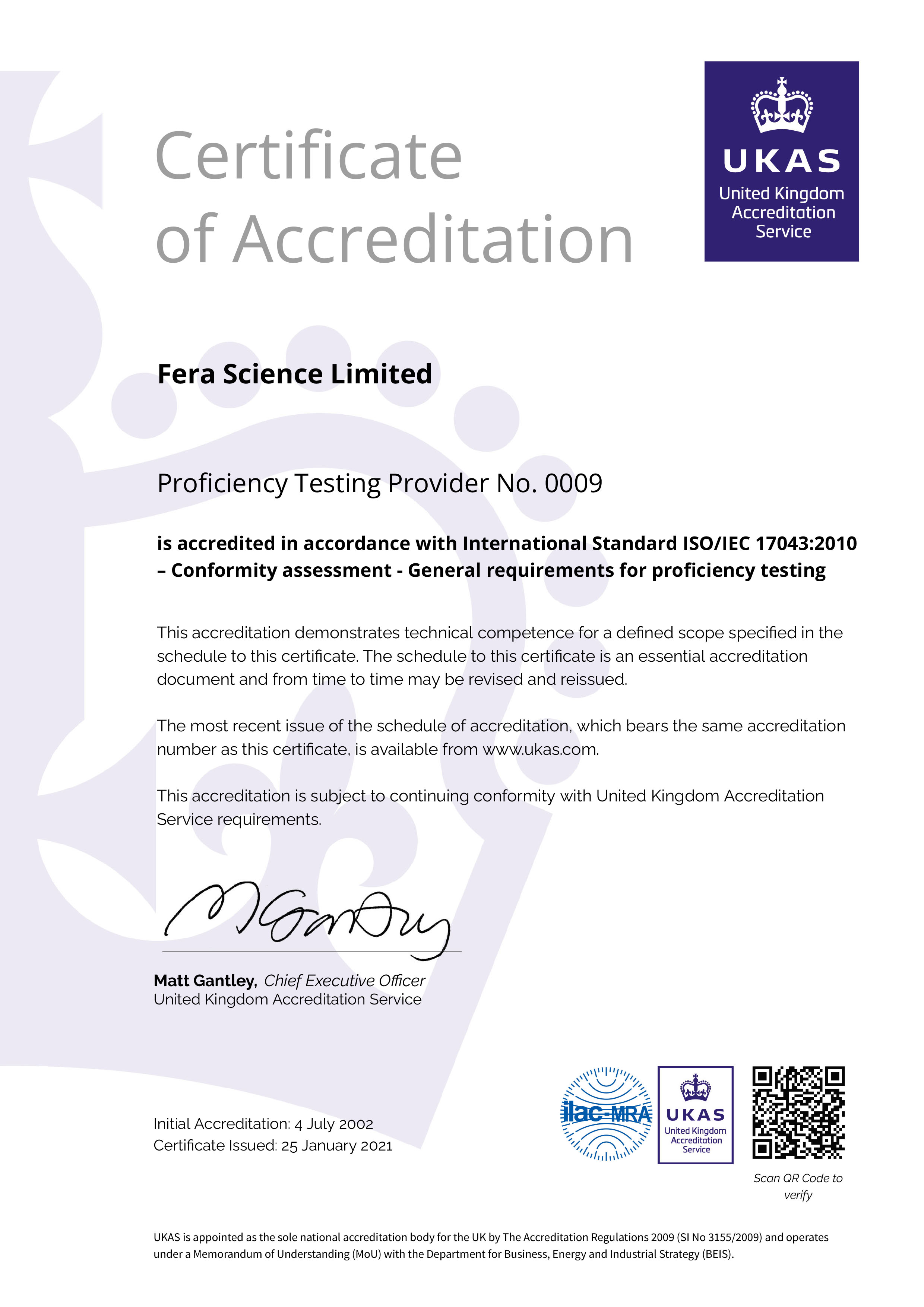
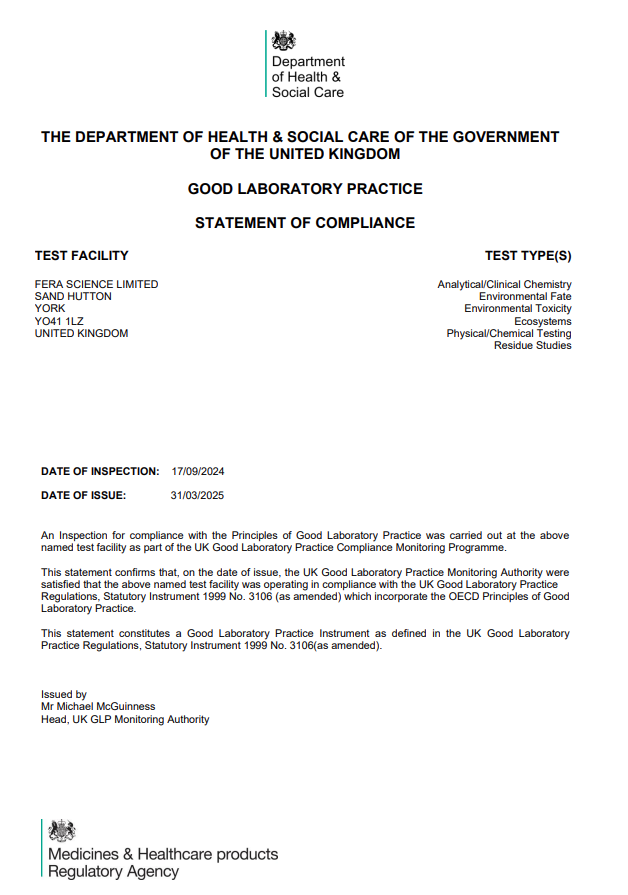
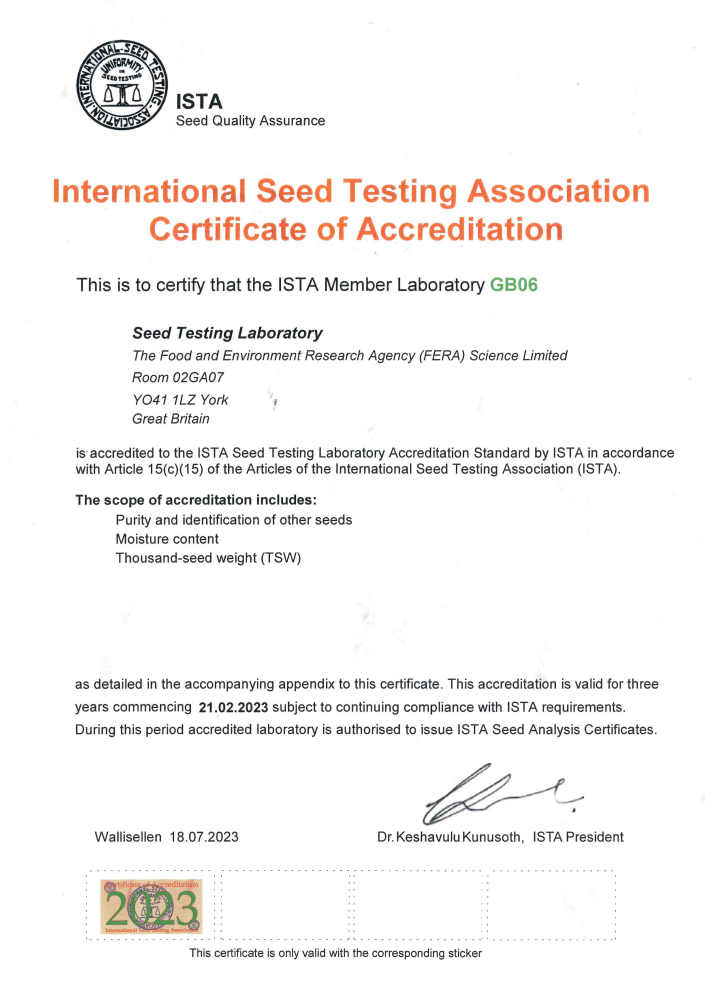
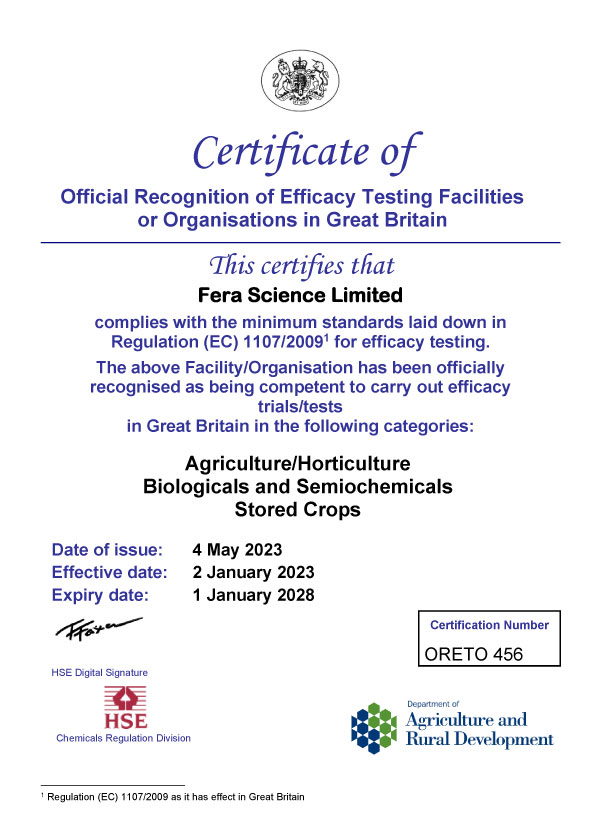
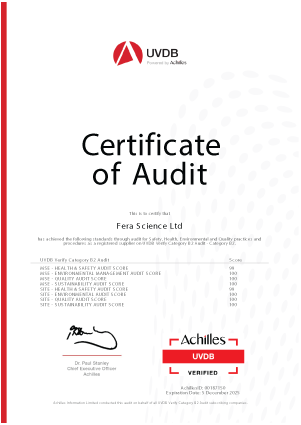


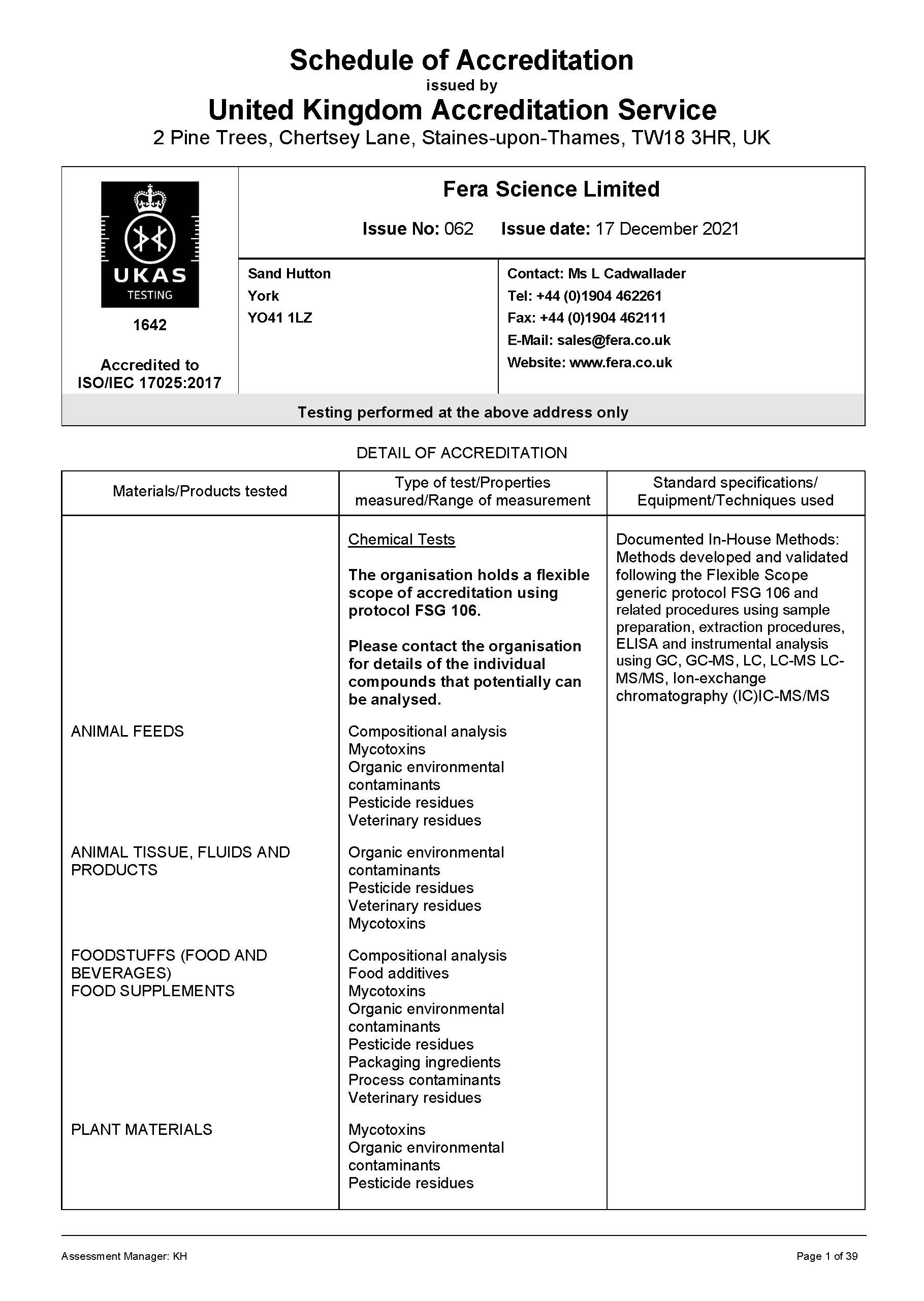
Schedules
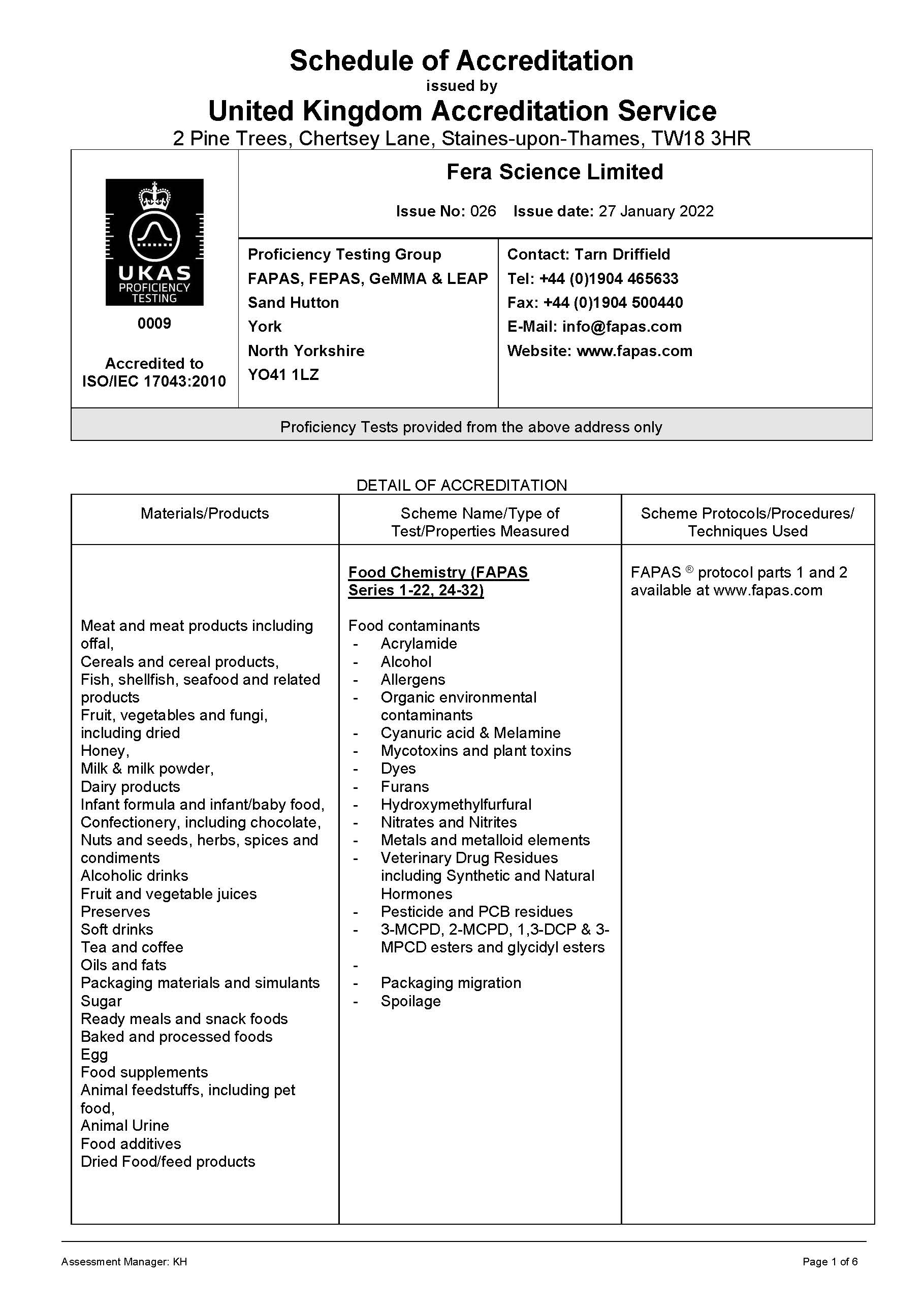
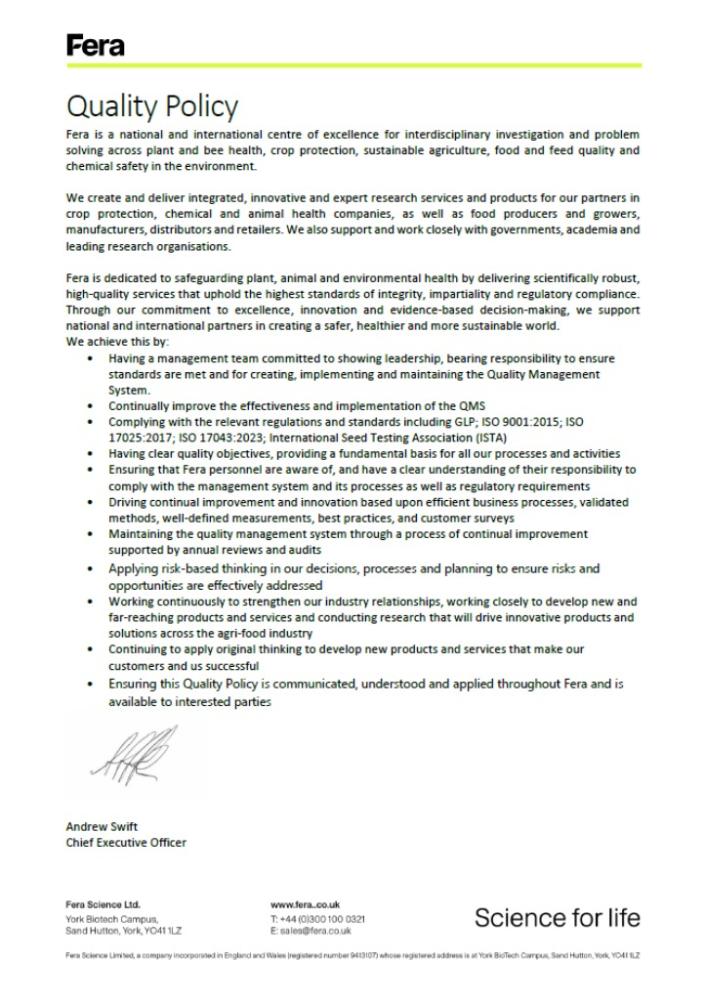
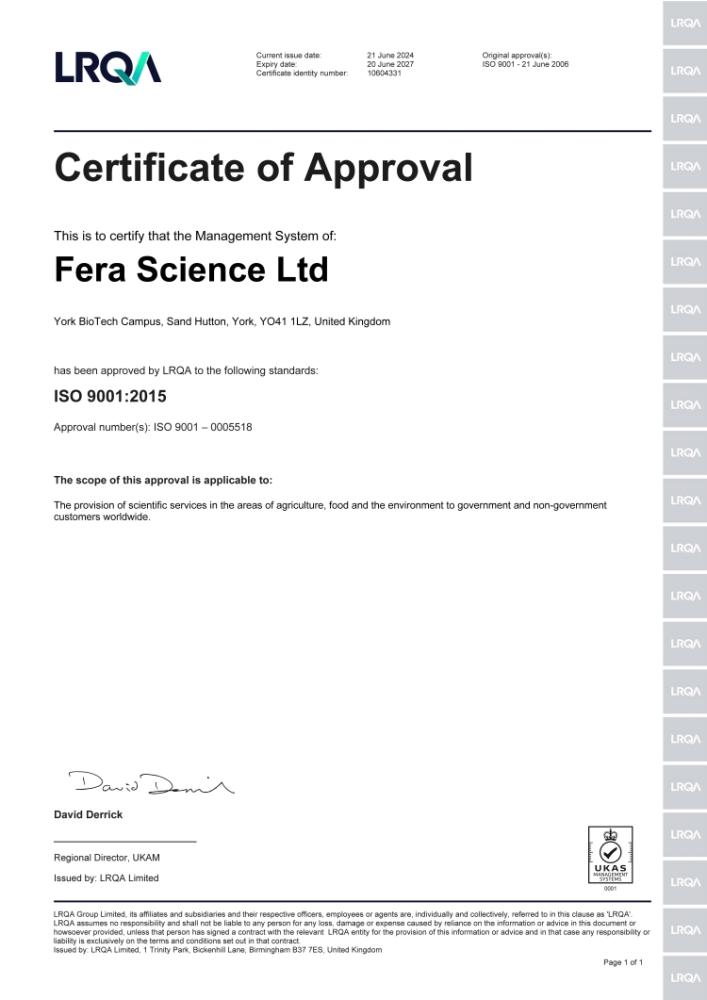
Staff at all levels play a key role in quality performance and ownership of the quality system is encouraged through training, communication and leadership. All aspects of the Fera business are certified to ISO 9001:2015 by Lloyds Register Quality Assurance and the certificates are available here. You can also find further information available here.
Scientific research is carried out in accordance with the Joint Code of Practice for Research (JCOP).
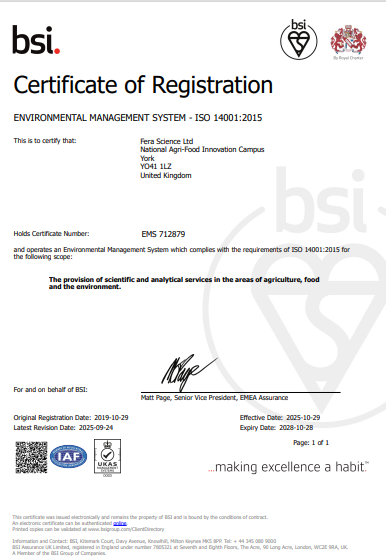
We take a proactive approach to good environmental management across all our business activities - read our Environment Policy which is available here. You can also find further information available here.
Fera Science is the 101st signatory of the Concordat on Openness joining organisations including universities, charities, commercial companies and research councils.

Fera Science uses animals in research where no alternatives are available in order to ensure that human health and the environment are protected by ensuring that veterinary medicines and agrochemicals are safe to use. Monthly Animal Welfare and Ethical Review Body (AWERB) meetings are held to ensure that all research using animals addresses the 3Rs (below) in the proposed plans of work and their application during research projects. The ethical review process involves Named Persons under the Animal (Scientific Procedures) Act 1986, researchers and lay persons in order to provide ethical advice on standards of animal care, welfare and accommodation and ensures that those working with animals are aware of their responsibilities and receive appropriate training.
- Replacement - use of methods which avoid or replace the use of animals
- Reduction - minimising the number of animals used
- Refinement - improvements in procedures and husbandry which minimise suffering, pain or distress or improves welfare
Fera Science follows strict guidance and regulations to maximise the welfare of animals used in our research. Our primary research areas are related to food and agriculture but we also perform research in:
- Wildlife Ecotoxicology including avoidance and repellency testing, behavioural studies, feeding rate manipulations and consumption studies
- Livestock metabolism including Absorption, Distribution, Metabolism and Excretion studies
Signatories to the Concordat undertake to fulfil 4 commitments:
-
We will be clear about when, how and why we use animals in research
-
We will enhance our communications with the media and the public about our research using animals
-
We will be proactive in providing opportunities for the public to find out about research using animals
-
We will report on progress annually and share our experiences