Fernando Nasso

Review of allergen analytical testing methodologies

Review of allergen analytical testing methodologies, funded by the Food Standards Agency 

Food allergy affects between 1-2% of the UK population, with some allergens responsible for hospital admissions with anaphylaxis. The Food Information Regulation (FIR) states that accurate and understandable allergen information needs to be supplied to consumers for the 14 priority food allergens. Food businesses have a legal responsibility to provide food that is safe, which means declaring the allergens present as ingredients and accurately warning consumers about their potential unintended presence due to cross-contact.

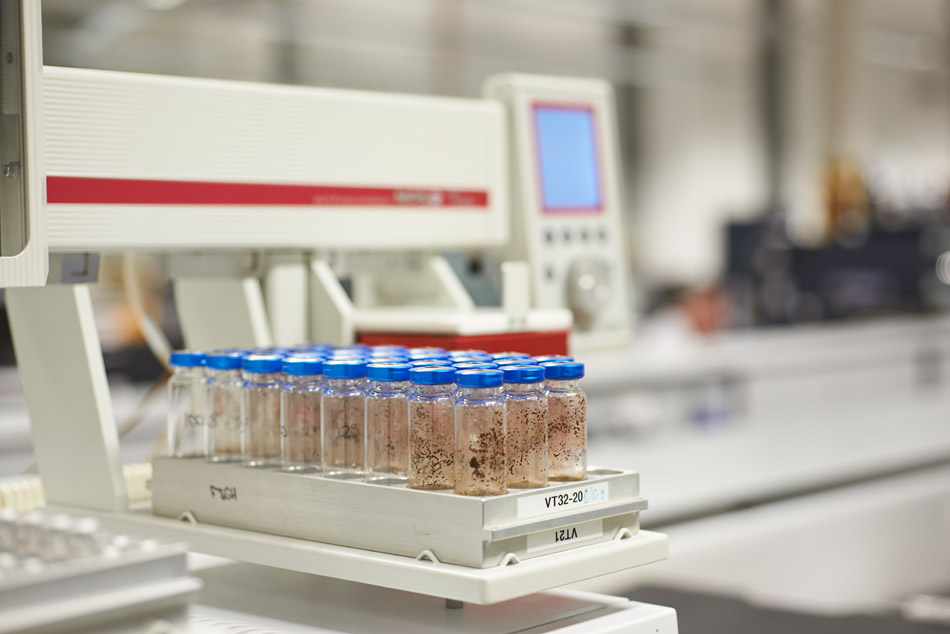
Funded by the FSA and to support the safety of UK consumers, Fera conducted a review on the current state of the art of allergen testing methodologies and the remaining challenges to allergen testing. This project combined a critical literature review of testing methods with assessments of Fapas® allergen proficiency testing data, consultation with stakeholders from the food industry, and consultation with industry experts regarding multiplex methodologies and the harmonisation of methods in an unbiased review of the current status of testing capabilities for the 14 EU-retained regulated food allergens.

Gaps in testing capabilities were highlighted to inform future direction. A review of allergen proficiency testing data revealed gaps in testing capabilities and variations between the outputs of different test kits when testing for the same allergen.

This review critically compared current testing methods to progress towards a suitable harmonised testing protocol that facilitates allergen risk management, and to mitigate limitations and evidence gaps.

Recent challenges in supply chains are resulting in manufacturers increasingly resorting to spot buying of ingredients when regular (and trusted) suppliers cannot meet demand or are using alternative (undeclared) ingredients. The practice of spot buying can inherently result in a reduced level of audit data and can result in increased risks of food fraud and safety and quality concerns.  Additionally, when foods are processed, the proteins can be altered and, in general, it becomes more difficult to detect the allergenic protein or peptides, the sensitivity of the method can be reduced or the method may no longer be fit for purpose. These points highlight the significance of potential gaps in testing capability and are identified in the report.  For these reasons it is wise to apply a confirmatory method when testing for food allergens, such as an alternative ELISA test or liquid chromatography mass spectrometry (LC-MS). Due to the high cost of purchase, running and maintaining the equipment and the specialist training required, relatively few laboratories benefit from LC-MS facilities. 

If you would like to speak to the team that conducted the review about LC-MS testing methodologies for allergens, allergen analysis of novel foods or to discuss allergen management across your supply chain, please click below.


Fera Science and CIEL Livestock Tour Event

Fera Science - Facility Tour

Fera is pleased to be welcoming the CIEL members to our site at York Biotech Campus on 18th October 2023.


Venue – Fera Science, Biotech Campus, York, YO41 1LZ

Date – 18 October, 2023

Time – 9:30-15:30


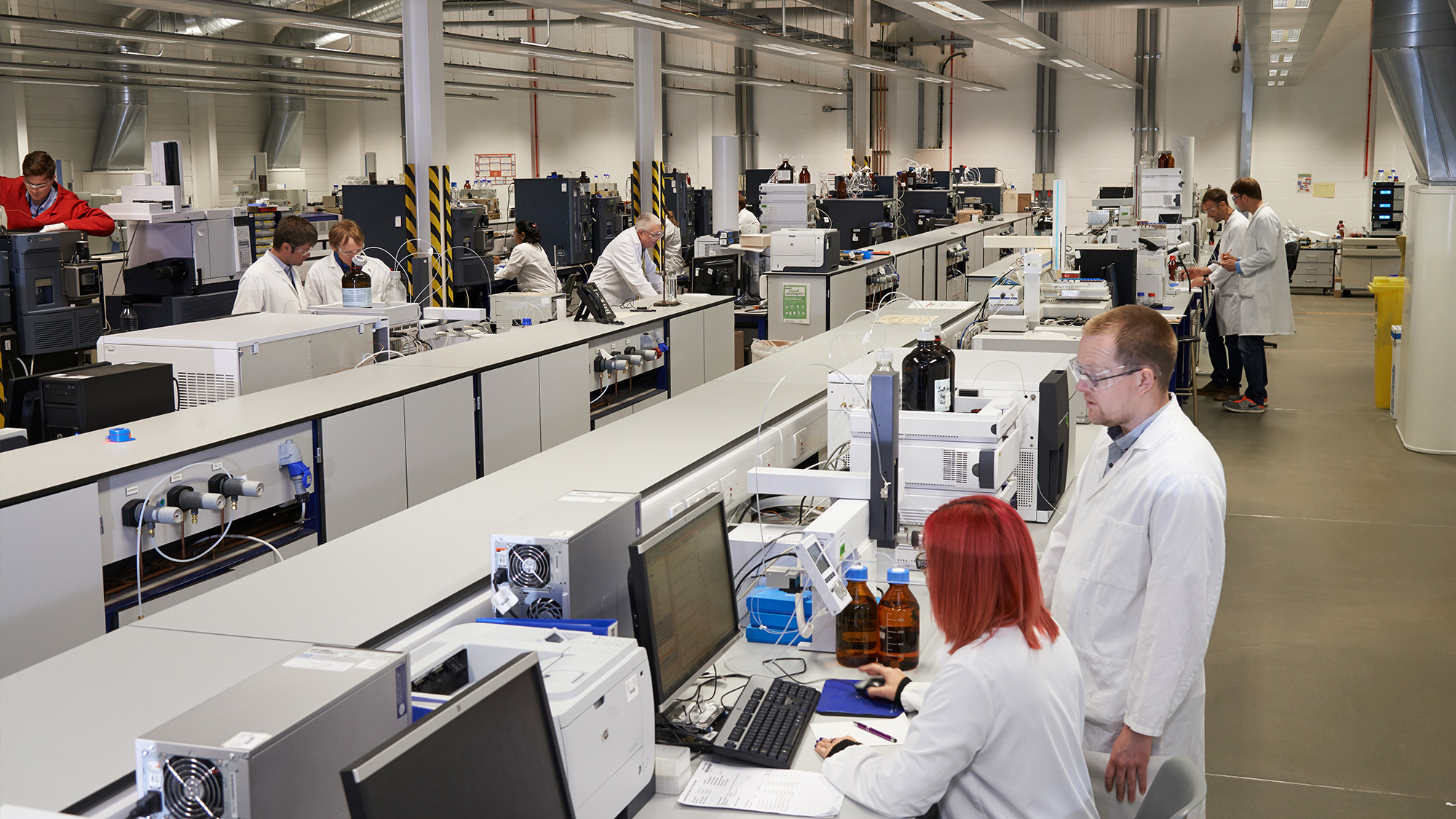
We look forward to hosting this visit and providing a tour of the facilities followed by lunch and then an informative discussions and knowledge exchange during the workshop. The facilities tour will provide an excellent opportunity to see the laboratories and speak to the experts across food & feed safety testing and diagnostics, insect bioconversion, life cycle analysis and more.


Hear about how as a National Reference Laboratory Fera has established a reputation for implementing new technologies, developing, and validating new methodologies and extending the scope of existing methods ensuring food and feed safety testing and diagnostics. 


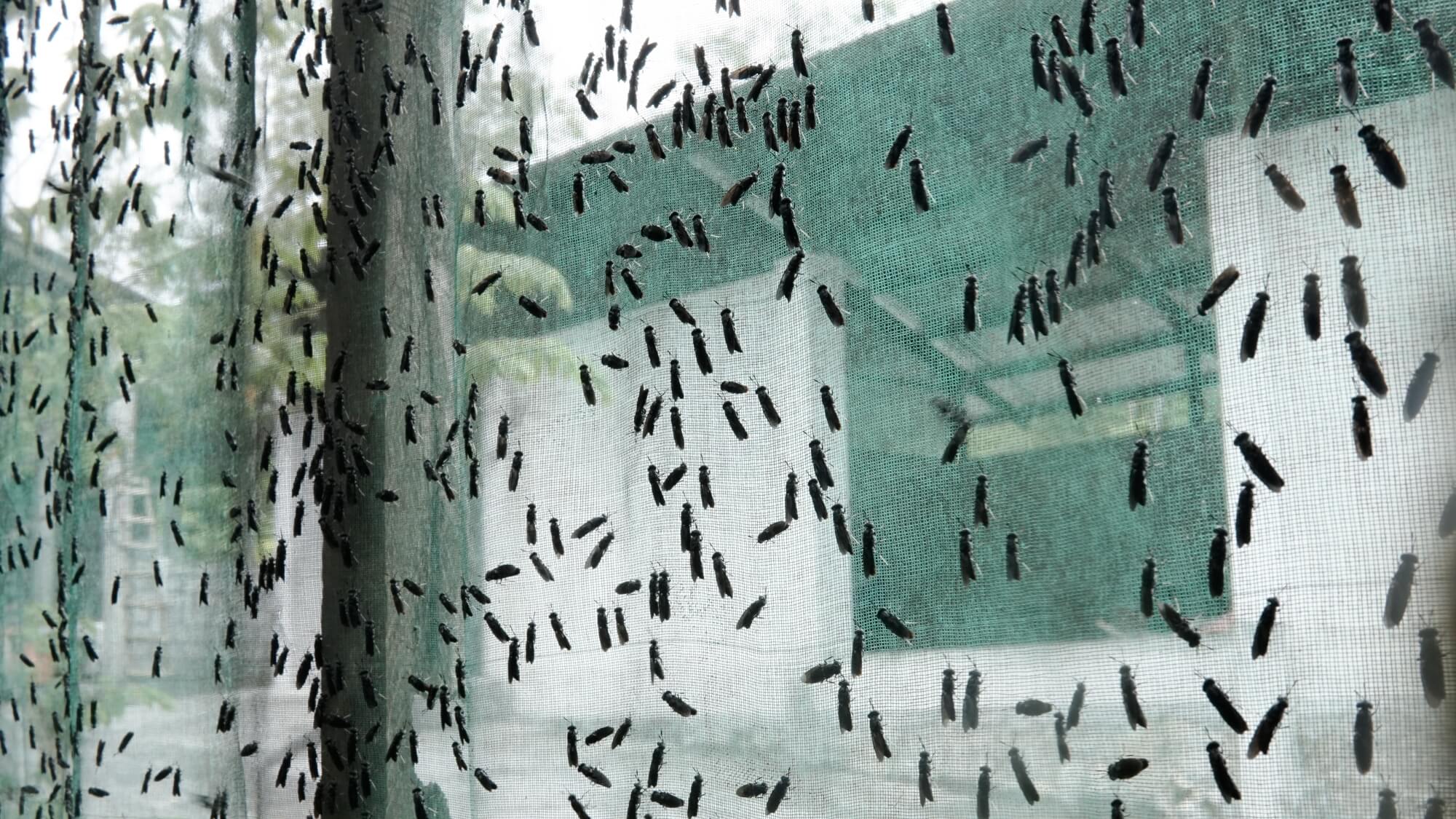
Whilst visiting our insect research unit our experts will discuss the latest science, insights, and applications of insect bioconversion, redistributing surplus food waste into animal feed contributing to the circular economy. 


We work as a centre of diagnostic excellence and innovation in agri-food to accelerate the development of emerging technologies into real-world applications. Measurement is at the heart of what we do. To help the agri-food industry tackle emerging and future challenges, we continue to pioneer new diagnostic and analytical technologies, allowing us to identify emerging threats and detect them earlier.


Please book your place by 11 October to guarantee your place.
Allocation of spaces will be on a first come first serve basis.

Changes to EFSA’s guidance on the risk assessment of plant protection products on bees

Summary

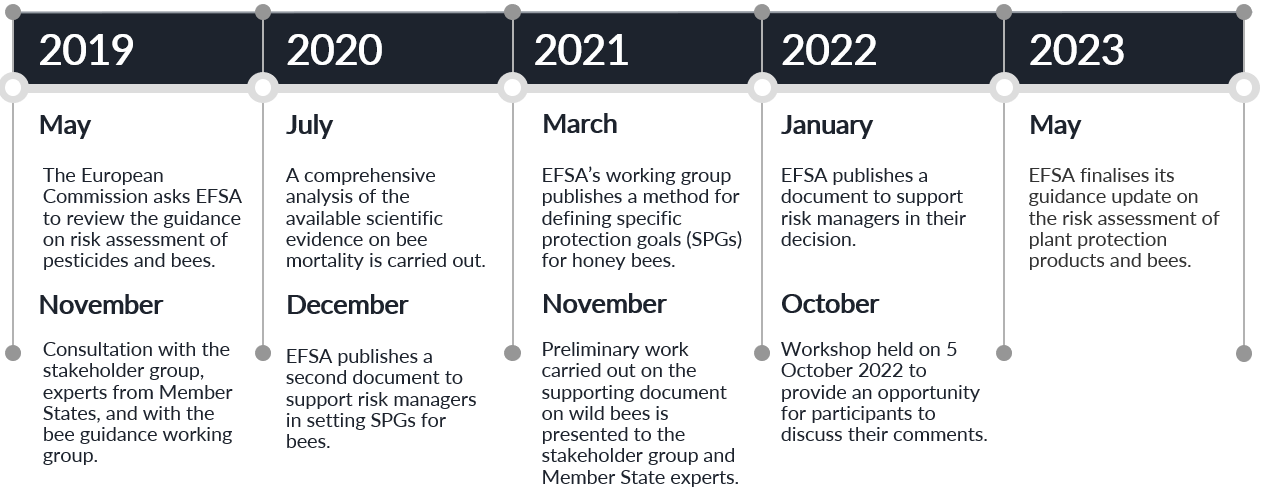
In 2019 the European Commission (EC) requested that the European Food Standards Agency (EFSA) revise their original 2013 Guidance document on risk assessment of plant protection products on bees (Apis mellifera, Bombus spp and solitary bees). Following the publication of the new revised draft document and a public consultation process in 2022, EFSA have now published the final document.

The revised guidance is available here.

Background

The 2013 Bee Guidance Document from EFSA was never fully endorsed by the majority of Member States in the Standing Committee on Plants, Animals, Food and Feed despite attempts over several years.

In March 2019 the EC mandated EFSA to review the 2013 Bee Guidance Document, taking  scientific knowledge and developments that had emerged since the publication of the original document into account.

The terms of reference of the mandate were to:

  • Consider feedback from stakeholders
  • Review bee background mortality
  • Review crop attractiveness
  • Review Risk Assessment methods
  • Review requirements for higher tier testing
  • Consider Specific Protection Goals (SPGs) from Risk Managers

Scope

  • Provide guidance in the context of the evaluation of PPPs and their active substances under Regulation (EC) 1107/2009
  • The focus is on direct effects; indirect effects are out of  scope
  • The focus is on chemicals, the Guidance does not cover the risk assessment for microbial biopesticides

EFSA Milestones

Click here to view all milestone

Main Changes

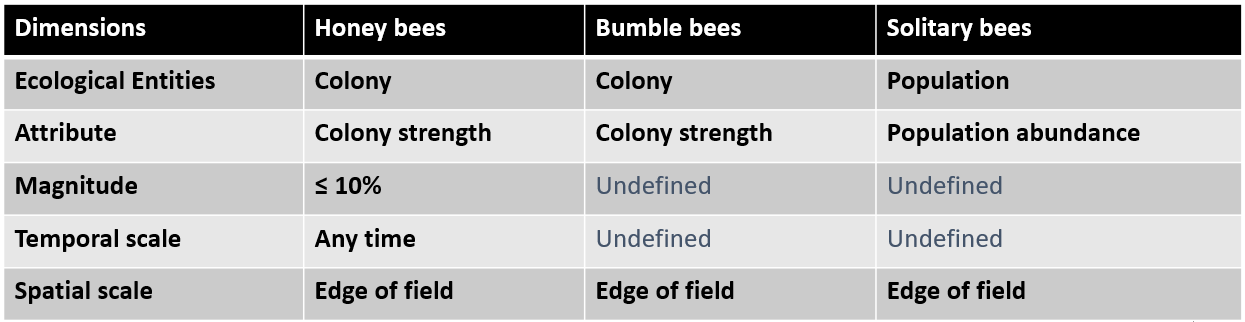
  • New SPG (Specific Protection Goal) - increased from 7% to 10%
  • Exposure estimations have been amended updated; plus new parameters included
  • Detailed guidance for Tier 2 options
  • Hazard characterization reconsidered
  • Extrapolation between species amended to use Toxicity Extrapolation Factors (Tef) where a surrogate endpoint is used
  • Risk Assessment method reconsidered
  • Statistical approaches have been updated
  • Introduction of Time Related Toxicity (TRT, previously accumulative toxicity)
  • Exposure via water routes (e.g. guttation, surface water) removed
  • Considerations for sublethal effects, metabolites and many more issues update

SPG agreed by Risk Managers

Pollinator Ecotoxicology

From standard laboratory studies to the more complex, bespoke higher tier studies designed to address specific risk assessment needs, our experts at Fera are perfectly placed to meet your data requirements, and to help our partners develop products that are safer for bees and other pollinators.

To help refine your risk assessment, Fera can undertake a range of higher tier cage, tunnel, or semi-field studies. Our capabilities include the Oomen Brood Feeding Study and the Honey Bee Brood Test under semi-field conditions (OECD GD 75).

If you need guidance on your pollinator study needs or are concerned about the impacts to your bee risk assessments due to the changes, our regulatory specialists are on hand to chat with you.

PRESS RELEASE: Fera Science’s deep dive into biopesticides

PRESS RELEASE: Fera Science’s deep dive into biopesticides

Despite widespread support across the sector, biopesticides aren’t yet realising their potential and stakeholders found out why, at a recent webinar hosted by Fera Science.

From the challenges of formulating new regulation and developing meaningful ecotoxicity guidelines, to the opportunities emerging from industry collaboration and farmer-to-farmer knowledge transfer, the session explored the present and future of biopesticides.

“Biopesticides have huge potential,” said Aoife Dillon, Principal Scientist of Crop Protection at Fera Science Limited. “These naturally occurring substances and micro-organisms, offer a wide range of safe and sustainable tools to help rebalance pests or disease populations in food production.”

Presenting the results of a recent Fera Science survey, Aoife revealed how efficacy concerns are preventing adoption of the technology. “Nearly 58% of respondents cited this as the biggest barrier to using biopesticides,” she said. “Cost and uncertainty about how to integrate biological controls with conventional plant protection products were also frequently mentioned.”

Over 67% of respondents said they wanted more research and advice on IPM. 58% indicated better regulatory understanding and guidelines for use would encourage greater adoption of more biological crop products.

Amanda Porter, Pesticides Policy Scientific Advisor for Defra noted that the new National Action Plan on the Sustainable Use of Pesticides (NAP) will be published this year, and that IPM will be at the heart of the plan. Amanda explained that the use of lower risk pesticides, including biopesticides, will play an important part in that picture.

The proposals in the NAP have built upon the responses that the team at Defra has received through consultation and in direct conversation. For biopesticides, it was noted that three areas were highlighted in these responses: regulation, training and use, and research and development.  The team at Defra are now looking towards delivery – and Amanda emphasised the importance of continuing those conversations with stakeholders going forwards.

Demonstrating how impactful policy change can be, Jennifer Lewis, Executive Director of International Biocontrol Manufacturers' Association (IBMA) pointed to Brazil.

“Around the world, wherever we have national biological policy, we see faster change,” she said. “In 2014, Brazil made drastic changes to its policy and the country has seen 42% compound market growth which is anticipated to continue.”

In just a few years, the number of products at growers’ disposal quadrupled and number of hectares treated with biocontrols more than doubled, reaching 23 million by 2021. Today, over 40% of the country’s nematicides are biocontrols, as are 30% of its insecticides and 10% of its fungicides.  

But, according to Jennifer, adaptations in policy needs to be supported by incentivising and rewarding change, as well as sharing best practice.

“When it comes to ‘learning from the best’, the ‘best’ is often the grower.  We’ve some great examples here in the UK.  Crop Health North, for example, has recently grown wheat using biocontrols from the horticulture sector, maintaining yields.

“We make huge steps forward when there’s farmer-to-farmer learning,” she notes.

Bringing the growers’ perspective to the webinar Ali Capper, apple and hop grower and NFU Horticulture Board member: “Farmers and growers need an ‘enabling framework’ – whether you’re talking about biopesticides, pesticides, fungicides. We need clear, certain, navigable regulation, and most in the industry don’t feel that we are there yet.”

“Our businesses move at a pace, and we need regulation that is agile. We need to be able to react to weather and changes in pest populations. Too often, when faced with an emerging pest or disease threatening crop yields, we get product approval when we’re harvesting.  That’s too late and not good enough.”

Since the demise of AHDB horticulture, the sector has been facing a gap to continue the work around EAMUs and emergency approvals.  That work will now continue with Ali sharing details of the new not-for-profit organisation, Horticulture Crop Protection Ltd. Ali will be chairing the board, made up of growers and technical experts from the crop associations. “By transferring the experts at AHDB and using the residual funds, while we work out how to best raise a voluntary levy or subscriptions, we’ll also have the means to react if there is an awful emerging pest or disease,” she said.

At the other end of the biopesticides supply chain, Mark Whittaker, Managing Director of Applied Insect Science Ltd described the issues with assessing the risks of biopesticides.

“No thought was put into the development of microbial ecotoxicity testing methods, or into the selection of the relevant test species,” he said. “It is a direct copy and paste of the chemical pesticide legislation which was designed for synthetic molecules that don’t naturally exist in the environment and that have rapid and toxic modes of action.

“Microbial active substances are at the other end of spectrum, having been isolated from the environment, often having co-existing with non-target organisms over an evolutionary timescale. They have slower, pathogenic modes of action. It’s wrong to assume the same testing is appropriate for both.”

In order to develop meaningful ecotoxicity testing for microbials three disciplines need to come together - ecology, entomology and microbiology – and we need to identify which species it makes most sense to test and then think about how best to test them. “We need to stop looking at biopesticides as chemists and start looking at them as biologists,” he concluded.

While there are many deep and complex challenges associated with what’s being described as the second ‘green revolution’ in agriculture, the willingness and passion to move towards a scientific risk-based approach to enable the approval and use of biopesticides was clear from all sides. “This webinar is just a start of a longer, deeper conversation in the industry,” summarised Aoife. “It takes collaboration to make change of this scale happen, and Fera Science is delighted to have been able to provide the platform.”

To watch the webinar visit: https://content.fera.co.uk/biopesticide-webinar-recording 

ICPPR Bee Protection Group - 15th INTERNATIONAL SYMPOSIUM

Fera were proud to host the International Commission for Plant-Pollinator Relationships (ICPPR) Bee Protection Group’s 15th symposium

The International Commission for Plant Pollinator Relationships (ICPPR) Bee Protection Group (BPG), is one of the scientific commissions of the International Union for Biological Sciences (IUBS) which is part of the International Council of the Scientific Unions (ICSU held its first meeting in Wageningen in the Netherlands in 1980. Over the last 40+ years the group has become the expert forum for addressing potential risks of pesticides to bees (both Apis (predominantly Apis mellifera - the European Honey Bee and in more recent times non-Apis species such as bumble bees and solitary bees)). The remit of the ICPPR BPG is to develop and test suitable methods for assessing the potential effects of plant protection products (PPPs) on bees. From concept, ring testing through to fully adopted internationally recognised Test Guidelines – the group has been responsible for developing Organisation for Economic Co-operation and Development (OECD) recognised Test Methods and Guidelines, including OECD TG 245 (10 day chronic adult honey bee test) and OECD TG 246 & 247 (acute contact and oral bumble bee tests). The BPG comprises a broad membership drawn from industry, regulatory bodies (risk assessors and risk managers), academia and contract research laboratories - all the people with the best knowledge and background to support the work of the group!! Anyone can join - it is an open membership and there is a truly international membership from Europe, North America, South America, and Asia.

The BPG is split in to working groups (WG) of specialists who come together to work on and answer specific questions, topics or current, future areas of interest; at present there are four WG’s;  Bee Brood WG, non-Apis WG, Semi-field and field WG and Microbials. The individual WGs work and report back on issues identified to the whole BPG via meetings and at the symposia.

After 2 years of teams and zoom meetings and virtual conferences during the COVID pandemic, the ICPPR BPG 15th International Symposium was finally held in 2022.

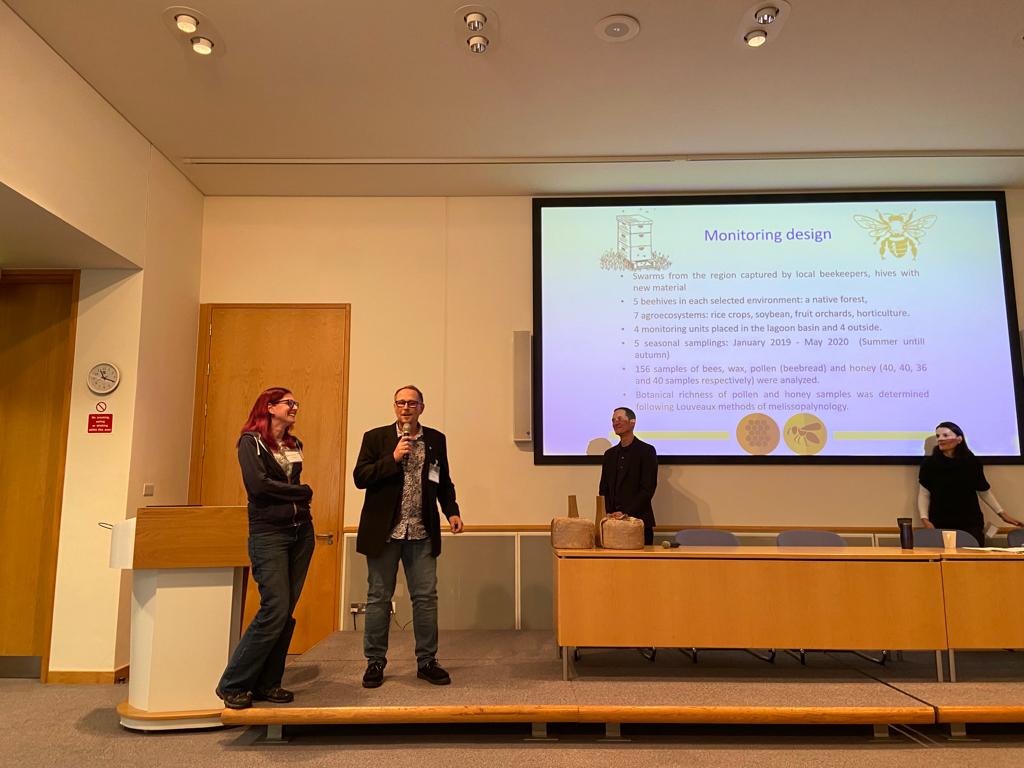
Approximately 120 people registered for the symposium in York for 4 days of interaction; presentations from international organisations, scientific presentations from individuals and groups, reports from WG’s, providing lively discussion and the exchange of ideas and opinions.

At this Symposium there were guest speakers and representatives from a range of international organisations, in fact the first day was dedicated to presentations from the Organization for Economic Co-operation and Development (OECD) (Leon van der Wal), the United Nations’ Food and Agricultural Organization (FAO) (William Garthwaite), The European Commission (Sofie Hoefkens) and The European Food Safety Authority (EFSA) (Csaba Szentes, Brecht Ingels, and Dirk Süßenbach) providing  delegates with an opportunity to hear how these key organisations are promoting sound science globally. The hope is that these interactions will lead to much closer collaborations between the parties in the future (e.g., Expert Group on Pollinator Testing and Assessment (EG-PTA)).

An example of how closer collaboration could be developed via these forums was the discussion following the presentations from the EFSA team. On the Guidance on the risk assessment for honey bees, bumble bees and solitary bees published in 2013; which was never fully ratified or implemented due to stakeholder and Member State concerns. In 2019 the European Commission asked EFSA to revise the 2013 publication. This was carried out by EFSA and a group of experts and the new Draft document was published and went up for public consultation earlier this year.

The Guidance Document outlines a tiered approach for exposure estimation in different scenarios. It includes hazard characterisation and provides risk assessment (RA) methodology covering both dietary and contact exposure. There are also recommendations for higher tier studies, and the document covers risks from metabolites and mixtures. During the symposium the EFSA team gave a number of detailed  presentations highlighting differences and a number of step changes in the approach from the 2013 document. EFSA are currently working on the comments received during the commenting phase of the consultation and it is hoped to produce a revised document – which the EC Commission (DG SANTE) is hoping will be accepted in early 2023. During the meeting it was suggested that once the document has been finalised, due to the huge changes in the RA scheme that EFSA should hold some workshops to help stakeholders through the document.

Day 2 focused on presentations from the WG chairs. For example, the Brood Working group that I co-chair has worked on three threads since last meeting;  producing a revised recommendation (EPPO publication) based on the Oomen et al direct feeding study, a ‘Conceptual Framework’ (the Poster was presented at the symposium) for clarification of the individual higher tier brood test methods based on their advantages and disadvantages and with regard to the type of test item under evaluation and also its application method, and revision of the OECD 75 Guidance Document (semi-field brood study) based on experience with the method and the inclusion of new developments such as digitized brood monitoring software. A revised document has been submitted to OECD and it is hoped that this will be agreed on at the next WNT meeting to be held in April 2023 and an updated version published.

Days 3 and the 4 were given to presentations from improvements of solitary bee oral dosing methods, modelling using BEEHAVEecotox to predict semi-field results and an assessment of an array of new and emerging technologies such as accurate bee counters.

All in all, it was an extremely thought provoking Symposium with a fascinating selection of presentations and interesting discussions, it is clear that the ICPPR BPG is a hugely active and productive group, helping to advance the area of testing the effects of pesticides to bees - using novel technology and approaches to assist with the provision of truly evidence based data to help authorities make informed regulatory decisions.

I would like to extend our thanks to everyone involved for making the event such a success -the ICPPR Steering Committee; Jens Pistorius, Anne Alix and Tom Steeger and to all of the delegates and presenters for their enthusiastic contributions. 

We are already looking forward to the next looking forward to the 16th Bee Protection Group International Symposium.

Pesticides Behaviour in Soil Water and Air

Pesticides Bahvaiour in Soil, Water and Air 2022

Join us at the event!


The conference will present the latest research into the environmental behaviour of pesticides and its application in assessing and managing risks to the environment and human health. Building from   research into basic processes at lab, field and landscape scales, through monitoring and modelling of   environmental behaviour and pathways of exposure, to development of practical management strategies to reduce contamination and new science to address a range of emerging challenges.


 The programme will be of interest to environmental scientists from research organisations, industry,   government and NGO’s and to those in related disciplines seeking a concise overview of the state-of-the   art. We particularly encourage contributions from PhD and early career researchers.


Fera will be exhibiting at the Pesticides Behaviour in Soil, Water and Air event so join us there!


Watch the video below for an introduction to our Senior Environmental Fate Scientist, Phil Rooney.


Watch the video below to meet Victoria Peck another of our Senior Environmental Fate Scientist at Fera


Fera have over 20 study directors in our chemical safety labs with over 400 years of combined experience. We continuously invest in our people and support them in delivering the best science to our partners. 


Click here to find out more about our Areas of Expertise and how we can help you today! 


Covid-19 Update

As the UK Government starts to slowly lift lockdown measures, at Fera we understand and recognise the importance of our role in continuing in providing responsive support services to all of our clients and partners, working nationally and internationally.

Read more

New and emerging novel foods


New and emerging novel foods - the UK regulatory system, market development, safety, and innovation in the food sector

This conference focuses on the regulation of new and emerging novel foods in the UK - including the way forward for policy following the UK’s exit from the EU, how regulation is responding to innovation in the food sector, and the role of novel food methods in addressing food system challenges.

Areas for discussion include:

  • establishing the UK regulatory system for novel foods - managing a smooth transition, new opportunities and challenges, and the future relationship with the EU
  • market development - improving access to novel food products across the plant-based sector, as well as insect foods and CBD
  • safety - ensuring that consumers are protected as the sector grows
  • research and development - priorities for driving forward innovation in the food sector, and how the regulatory system can keep pace
  • sustainable food production - the role of novel foods, and the next steps for meeting strategic challenges within the food system

The discussion is bringing together stakeholders with key policy officials who are due to attend from Defra; DHSC; the CCC; the FSA; Food Standards Scotland; BEIS; DIT; the Foreign, Commonwealth and Development Office; and the Welsh Government.

Find out more and Book here

FUTURE CANNABIS STRATEGY CONFERENCE EUROPE 2021

Future Cannabis Strategies Europe will bring together business leaders from across the wider European Consumer-Facing Cannabis products category, this includes CBD/ Cannabis Products & Devices, Beverages, Tobacco/ vapes, Cosmeceuticals & Nutraceuticals, medical cannabis progression, together with solution providers for 2 days of insight, discussion and debate into how manufacturers can:

  • Understand the need for education surrounding cannabis to promote cannabis products in both medical and consumer concepts
  • Identify opportunities to introduce Cannabis/ Hemp infused products into existing products
  • Review recent product innovation in formats and portfolio development to identify opportunities for growth
  • Follow up on the Food Licence Process to create a safer and more trusted cannabis industry to market

The Future Cannabis Strategy Conference brings together key opinion leaders from some of the biggest brands in the industry with a mix of small –mid-sized disruptive companies that have shaken up the category with new offerings and methods. We look at the future of cannabis in Europe through the lens of Canada, Australia and the USA who are leading in the sector to identify opportunity for market growth.

Find out more and Book here