Bright future for biopesticides
ABIM 2023 insights from Dr Aoife Dillon & Selwyn Wilkins

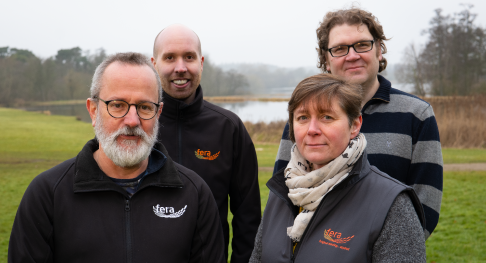
 Dr Aoife Dillon
Principal Scientist - Crop Protection

Senior Bee Ecotoxicologist
The inaugural Annual Biocontrol Industry Meeting (ABIM) back in 2005 was a small affair, attracting a fraction of the numbers which now attend. Each attendee, in their own way, had seen the potential of using nature’s own solutions to solve one of humanity’s biggest challenges – how to produce more food, sustainably.
While we dared to hope that the full potential of these technologies could be reached, there was clearly a mountain to climb, and we knew it would be essential to encourage others to join us on the hike ahead. A wide range of skills, knowledge and experience were going to be essential for a path to be found and successfully navigated.
Over recent years this aspect of our ascent has gathered momentum. Over 1,800 delegates, from 600 organisations and 58 countries attended ABIM this year. Our expedition party has grown substantially and includes a diverse range of experts – from the broad spectrum of scientists and product manufacturers to regulators and policy makers.
Today the summit is in sight too. We saw glimpses in the main sessions, the technical meetings and in the exhibition of ABIM. But probably the best example was in the event’s Bernard Blum Award.
Awarded in recognition of innovation, this year’s winner, DCM’s PEA-02®, is a bacteriophage (a virus to control a bacteria) aimed at fireblight in apples. Its journey to market has tested regulations and processes, forcing the exploration of approaches to assessing the risk of these new technologies.
As a result, there’s a new guidance document from the OECD explaining the regulatory pathway. This product has forged the way for others. It’s a seemingly small step, yet for those R&D companies that have been investigating the potential of phages, and for the growers in need of sustainable options to protect crops, a route has been cleared and their way forward should be easier and quicker.
While our industry gathered to discuss many different aspects of biocontrols, The European Parliament’s Committee on Environment, Public Health and Food Safety (ENVI) voted in favour of MEP Sarah Wiener’s report on the Sustainable Use of Plant Protection Products Regulation (SUR) with provisions for an EU-wide definition of biological control, their use in sensitive areas and a fast-track of authorisation procedures, the announcement was warmly welcomed by the industry and had the potential to secure Europe’s position as one of the world’s path finders.
Sadly, post ABIM, on November 22 2023, in the next stage of the bill's journey to regulation, a majority of the European Parliament voted to reject SUR. This is clearly disappointing, being described by MEP Sarah Wiener as “a very dark day for the environment and farmers”.
For the small organisations, university spin outs and others on the first rung of commercialisation, this change would have enabled greater access to funding and provided investors with much-needed clarity on the cost and timelines associated with the regulatory pathway these products travel for approval in the EU. For growers, the move would have meant they are increasingly likely to have more tools, more quickly, improving their ability to mitigate the risks associated with pests and disease. Downstream, food companies’ potential to meet demand for products grown with more regenerative practices would have been greater than ever before.
With pressure from consumers, environmentalists and other stakeholders not abating any time soon, there’s good reason to hope that we will see legislation that drives the sustainability of agriculture in Europe coming into law in the not-too-distant future. And while we won’t see any aspects of SUR come into play this legislative term, The Commission can withdraw the proposal and propose new text.
Even without legislation, those closer to the ground are already realising the benefits of alternative approaches to food production and many see biocontrols as a better way of protecting crops within these frameworks.
Governments also have the freedom to drive change outside of legislation – policies and incentives are other tools in their toolboxes and in one of ABIM’s technical meetings, Dr Dillon reflected on how the UK government is using them to steer a new course.
Through its draft National Action Plan and its Sustainable Farming Incentive, UK government has made it clear that it foresees integrated pest management as farming’s future approach to protecting plants from pests and diseases.
We are seeing support for farmers growing, with greater sources of information like ‘IPM Decisions’ and ‘IPMworks’, as well as research into improving the use of biopesticides in the field with the AMBER project.
UK government has also invested in a ‘biopesticide champion’ to help product innovators and manufacturers through the approvals process, and our regulator has added much-needed capacity to evaluate biopesticide submissions. Given that assessing microbial dossiers requires a different mindset to their chemical counterparts, this is very much welcomed.
Together, the use of incentives, the investment in knowledge transfer, and increasing resources to facilitate the processing of new products to market are explicit indicators showing the desired direction of travel.
For many of us who have worked on biocontrols, these market drivers mean one thing – years and years of work is coming to fruition. While our regulatory processes and understanding of how to use biopesticides isn’t perfect, together, we’re approaching the mountain’s summit and many of the hardest parts of our hike are behind us. It is in no small part due to the inquisitive minds of scientists, the collaboration between experts, and the determination of stakeholders.
About Fera Science & Biocontrols
For over a century we’ve been delivering world-class science for our partners, for the future. With over 250 years of combined biopesticide expertise, our team of dedicated scientists are here to guide you through the evolving landscape of biopesticide regulations.
We cover it all, from discovery and efficacy testing to microbiology, 5 batch analysis, contaminant and residue analysis, storage stability testing, analytical chemistry, ecotoxicology, metabolism, and environmental fate.
If you’d like to know more, please don’t hesitate to get in touch.