

As concerns over climate change grow, the food and drink industry has been developing new food packaging to reduce the environmental impact of fossil-derived plastics. But it’s not always easy. Not only must they ensure these new materials are safe for food contact, they must also provide adequate barrier properties to protect the packaged foodstuff from the external environment. Read more
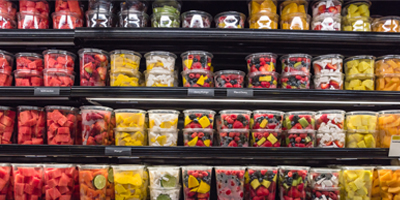
A substantial portion of food and drink packaging in current use is based on materials derived from petroleum feedstock, i.e. plastics. These fossil-carbon based materials have been developed to protect the packaged foodstuff from the external environment and so confer many of the necessary barrier properties. These are desirable attributes in the cause of minimizing food waste for economic, societal and environmental benefits. Read more

Increasingly, the unprecedented levels of food waste in the developed world, at a time when close to one billion of the world’s population faces starvation, is seen as an international scandal.
Read more

The safety of bio-based food contact materials has been examined in a new report produced for the FSA with the scientific work performed by Fera. Read more

Organisations and individuals working in the food supply chain will be able to tap into new advances and expertise in food and drink packaging, thanks to a new course developed by the Institute for Agri-Food Research and Innovation (IAFRI), a joint venture between Newcastle University and Fera Science Ltd (Fera). Read more