Chloe Acland

Scientific Collaboration Announced Between Yorkshire Water And Fera Science Ltd To Explore Insect Bioconversion Innovation In Waste Water Management

Yorkshire Water and Fera Science Ltd are collaborating in early-stage research to explore and test the feasibility of using insect bioconversion to manage sewage sludge.

Richard Kershaw, Wastewater Innovation Programme Manager, Yorkshire Water said: “Yorkshire Water is committed to exploring innovative approaches to dealing with the most challenging aspects of waste water management, including sewage sludge. The science of insects and their ability via bioconversion to manage a variety of challenging waste streams safely and effectively is building exponentially. Hence our interest in and commitment to funding preliminary work with Fera using black soldier fly larvae on sewage sludge.”

Yorkshire Water have agreed a three-month preliminary research programme managed by Fera. Four samples of sewage sludge from different geographical locations and type of wastewater treatment plant will be examined to determine the ability of these samples to support insect development.

Dr Maureen Wakefield, Principal Scientist Entomology at Fera is leading the research for Yorkshire Water: “The research project for Yorkshire Water being run by Fera is, by design, limited in scope but has the potential to point the way forwards to larger scale research programmes that may support companies in managing complex waste water streams, including sewage sludge, utilising insects.”      

Following the successful completion of the initial research, there is the potential for Fera to work with Yorkshire Water, and other appropriate partners, to scale up the research focusing on the vital topic of safety as well as feasibility and the potential of volume reduction of the complex waste stream.

Richard Kershaw of Yorkshire Water continues: “Once the research results and recommendations for taking the work forward have been received from Fera, we are ready to work in partnership to fully explore the potential of insect bioconversion to help us and other companies to manage this complex waste sustainably, safely and effectively.”

Further information on Fera’s Insect Research Laboratory and Insect Bioconversion is available here: https://www.fera.co.uk/insect-bioconversion-services

Fera Celebrates One Year of Enigma

Fera Celebrates One Year of Enigma

Fera is proud to be celebrating the one-year anniversary of Enigma, the collaborative research model, which has achieved great success in advancing sustainable agriculture practices. This innovative approach has brought together industry partners and Fera experts to tackle the pressing issues facing the agri-food sector.


The Enigma model was launched in April 2022 with Enigma I: Sustainable Wireworm IPM and was developed in collaboration with industry partners to respond to the irrevocable damage caused by wireworm to root crops such as potatoes and carrots as well as the stems of some crop plants, including cereals, field beans, leeks, lettuce, onions, peas, maize, and sugar beet.


Wireworm damage is currently a barrier to implementing regenerative agriculture practices and is reported to cause annual yield losses of up to 10%. Wireworm populations in minimum tillage systems are as high as wireworm populations on land previously under grass. To fully understand the changing dynamics of wireworm damage and to use Integrated Pest Management (IPM) to reduce and avoid wireworm damage, we must understand why and how damage patterns are changing. We need to monitor wireworm populations, understand how these translate into crop damage and design new strategies to minimise the commercial risk.


Enigma I has proven to be a resounding success, revolutionising the way we approach research in the agri-food sector, and it is a unique approach to research and development that brings together experts from academia, industry, and government to collaborate on innovative solutions for the agri-food sector. Representatives from Syngenta, Frontier, G’s Fresh, Elveden Estate, Pearce Seeds, Inov3PT and Blackthorn Arable, representing a range of crops and stages in the supply chain, are collaborating on Enigma I to understand wireworm and its changing patterns of damage in greater detail.


Over the past year, Enigma I has yielded impressive results. The Fera team and project partners have collected and identified 1,124 click beetles of several different species from multiple locations across the UK and France. Fera has ranked these for further study based on their abundance and potential to damage crops. The collection of adult beetles is being used to develop DNA barcoding which will allow us to identify wireworms to species. This is currently almost impossible, particularly for small larvae. Fera has also completed a literature review to identify gaps in knowledge of environmental parameters affecting the lifecycles of the wireworm species of greatest concern in the UK. We will generate data to fill some of these gaps and this will allow better targeting of Integrated Pest Management in the future.


By working in tandem with our partners, information gained from the surveying and monitoring will allow us to update our sampling strategies for the crops of concern and to understand the relationship between the wireworm populations of the species present and crop damage. We will also gain an understanding of the responses of different species of wireworms to cover cropping and min-till agriculture. The results of the work described above, together with an understanding of the life histories of the different wireworm species, will allow us to develop guidelines to minimise wireworm damage across a range of crops.


Throughout this research, the Enigma model has fostered continued innovation and knowledge transfer across the agri-food sector. The online Enigma Hub, launched as part of the model, has provided a platform for ongoing communications with partners.


Reflecting on the Enigma model's success, Fera Growth Director Wendy Martindale said, "The Enigma model has enabled us to work more closely than ever with our industry partners, and the results speak for themselves. We are proud to be leading the way in collaborative research and innovation, and we look forward to continuing this important work in the years to come."


The success of Enigma I has been made possible through the collaborative efforts of Fera and its industry partners, who have provided valuable support and expertise throughout the development process. This partnership has enabled the Enigma team to work closely with growers to identify their needs and develop tailored solutions that meet their specific requirements.


In addition to the development of Enigma I, the Enigma model is also expected to successfully foster innovation and knowledge transfer across the agri-food sector. By bringing together experts from different fields, Enigma will facilitate the sharing of ideas and best practices, leading to the development of new and innovative solutions to the challenges facing the sector.


Looking ahead, Fera is committed to continuing its work with industry partners to drive further innovation and knowledge transfer across the agri-food sector. Through the Enigma model, Fera aims to build on the success of the past year and deliver further sustainable solutions that meet the needs of growers and the wider industry through future Enigma projects.


"We are excited for the future of Enigma projects and the impact they will have on sustainable food production. By building on the success of Enigma I and continuing to collaborate with industry partners, we can further address the challenges facing our global food system and contribute to a more sustainable future for all." Explains Wendy Martindale.


The one-year anniversary of the Enigma is a significant milestone for Fera and its partners, and one that highlights the importance of collaboration and a joined-up approach in tackling the challenges facing the agri-food sector. With continued support and investment, Enigma has the potential to drive further advances in sustainable agriculture practices and deliver real benefits for growers and the wider industry.


For more information on Enigma, including getting involved with Enigma I, or future Enigma projects, click here.

Fera Science Ltd. announces its involvement in a three-year research project with Purina to explore the potential of seaweed as a bio-stimulant in regenerative agriculture

Fera Science Ltd. announces its involvement in a three-year research project with Purina to explore the potential of seaweed as a bio-stimulant in regenerative agriculture.

Fera Science Ltd (Fera), a leading UK-based science organisation, is pleased to have been appointed as technical coordinator for Purina's three-year research project exploring how seaweed bio-stimulants can be used in regenerative agriculture.


In many regions of the world, food production relies on synthetic fertilisers, overuse of which can negatively impact soil health, biodiversity, water, and air, as well as the climate. This project will investigate the effects of seaweed-based bio-stimulants on crop growth, soil health, plant performance and nutritional value. Fera Science will lead the Purina-sponsored study, which brings together experts in seaweed bio-stimulants, plant health and soil science including Wageningen University & Research (WUR), Plant Science group and the Kelp Forest Foundation, with Agricarbon UK and NatureMetrics.


Fera will provide expertise in the design and execution of field trials, data analysis, and the development of practical recommendations for farmers and evaluating whether seaweed bio-stimulants can help farmers to reduce synthetic fertiliser inputs, while maintaining yield.


In addition to coordinating the field trials, Fera Science is also responsible for testing the nutritional content of crops, as well as conducting contaminant testing for soil and crops.


Dr. Aoife Dillon, Principal Scientist (Crop Protection) at Fera Science, commented on the project, saying: " We are excited to be working with Purina on this research project. Seaweed bio-stimulants can potentially improve crop nutrient use efficiency, stimulate soil microbiome, and improve the resilience of plants to extreme weather events (abiotic stress). As such, they can be a valuable tool for farmers seeking to improve soil health and crop productivity, while also reducing their environmental impact. Our role as technical coordinator will be to ensure that the project is designed and executed to the highest standards, and that the results are robust and reliable."


The project is supporting Purina's ongoing commitment to source 50% of its key ingredients from regenerative agriculture by 2030, as part of Nestlé’s net zero pledge. By exploring the potential of seaweed as a bio-stimulant, Purina hopes to help farmers reduce their environmental impact, while also promoting the health and well-being of animals and humans alike.


Sheri Smithey, Head of Product and Technology Development for Purina said: “We must explore innovative solutions if we are to make progress against our climate goals. We are proud to be working with partners in researching the potential of seaweed-based bio-stimulants to help farmers and our supply chains adopt more regenerative agricultural practices.”


Juli Plassmeyer, Vice President Global Marketing and Sustainability at Nestlé Purina Petcare, said: “Purina’s strong commitment to sustainability encompasses the transition to regenerative agricultural practises for our ingredient sourcing. We must explore novel solutions like these to help accelerate the transition.”

Fera Science Ltd. celebrates success at the York Press Business Awards

Fera Science Ltd., (Fera) is thrilled to announce its recent success at the 31st York Press Business Awards. The York-based science services business won with its inaugural entry in the ‘Business Innovation of the Year’ category and went on to win the top award of Press Business of the Year 2022.

Several members of Fera’s team and a number of guests joined the estimated 600 attendees at the glittering black-tie event for the York Press Business Awards, including Dr Larissa Collins, Dr Maureen Wakefield, Dr Glyn Jones, and Philippa Hobby, who received the award on behalf of Fera.

Speaking at the podium as a representative of the company, Dr Larissa Collins exclaimed,

“It’s an absolute honour to receive this award on behalf of my colleagues at Fera. This award really recognises that we really are a truly innovative business. We are constantly deploying our original thinking to tackle practical problems for our customers - to help society, food production, the environment and to ultimately keep our food system safe.”

Dr Collins, lead scientist on Fera’s Enigma Programme - a strategic R&D model established to support continued research, innovation, and knowledge transfer across the agri-food sector - went on to say,

“Anyone who strives for innovation knows that not everything works, but we’re good at persevering. It’s our staff’s expertise and passion for finding solutions for our customers that’s so important. And as we translate science into practical innovations, it’s important for us to listen to our customers so we know what they require so we can devise the most expedient and effective route to resolve their problems using the vast array of science disciplines that we have at Fera.”

Fera’s entry in ‘Business Innovation of the Year’ spotlights the internationally pioneering contribution it has made over the last decade to prove and develop the potential of insect bioconversion to upcycle organic waste from ‘environmental hazard’ to ‘valorised product’ under a near perfect circular economy and which has culminated in it investing £1m this year to build and commission its ‘first of its kind’, insect research laboratory at its base at the York Biotech Campus (YBC). (Read more here).

Fera also highlighted the long history of pioneering innovation it has seen in recent years, mostly notably through Enigma (considered one of the first research models of its kind in the agri-food sector) a model which relies upon industry collaboration to address exacting common challenges, as well as LAND360; a new service to measure, monitor and assess natural capital in response to Defra’s environmental land management schemes (ELMs), and the drive to manage land in a way that recognises ‘public money for public good’.

As the winning organisation in the Innovation category, Fera is proud of its Yorkshire base and its work with regional, national and global partners, continually investing and expanding its product and service offerings to not only respond to industry requirements but to also continue to support the local economy by creating high quality employment. Working with talent from within the region alongside a programme of regional community engagement and investment in our staff, apprentices and PhD students, Fera provides attractive career progression opportunities.

Success didn’t end there for Fera, as it went on to win the top trophy of overall Press Business of the Year 2022. After initially describing his shock upon receiving this prestigious award and thanking the York Press and all of those who had made the event such a success, Dr Andrew Swift (CEO), went on to deliver a passionate and thought-provoking speech on the importance of protecting the food system for the future generations,

“I am totally shocked, but I am so grateful to the sponsors and the organisers for us to have been considered for this award… Most people don’t realise how Fera’s work provides an invisible blanket for our national biosecurity, food safety and food security. We’ve heard some terrific awards tonight, celebrating business purpose, but what better purpose is there in the sense of business than protecting you what you eat and the world in which we live for those who follow us?”

Met with applause at the sentiment, Dr Swift went on to say,

“The kind of work that Fera does is not only for today’s economic success but is for your children and your children’s children. Fera is innovative and Fera is important because we’re trying to find ways every day of the week to feed the world more sustainably, more regeneratively and to drive down net zero carbon in the region as fast as we can including alongside our partners in BioYorkshire.”

With over 100 entries, the awards have long been a major fixture in the York business calendar, with this year as no exception. The 2022 Awards celebrate businesses across Yorkshire in 11 categories, who have thrived in their respective sectors despite current economic challenges - long-standing businesses and start-ups going from strength to strength - firms who have proved their calibre as responsible employers and those who put sustainability at the heart of their missions.

OFC 2023 Fringe Event

OFC 2023 Fringe Event

Join us online!


New for this year, OFC 2023 will start on 8 December 2022 with the fringe programme taking place online. Following the success of the last event, with more delegates able to attend their desired sessions, there will only be one fringe per hour.

Fera will be speaking at the fringe event, discussing our innovative thinking following the recently launched Insect Research Unit at Fera Science.


Read below to find the key topic for our fringe session, what we'll be talking about and watch this space as we update you on our speaking panel for the event.


Can Insect Bioconversion help provide Feed Security and Lower Carbon Footprint amid the growing Demand for Protein?

As the global demand for protein increases, Fera examines the benefits of insect protein to provide feed security to the farming industry. Insect protein has the potential to reduce the carbon footprint of importing soya as part of production and can become an integral part in adopting regenerative practices. Fera discusses the current end-user perceptions of insect protein as well as the current UK regulation surrounding the alternative protein.


Having Tamara Finkelstein, Permanent Secretary at Defra, offically open the new Insect Research Laboratory in August 2022, we are proud to have pioneered and launched the application of insect bioconversion to upcycle biomass residues into valorised products for the economy, at Fera Science.

The OFC Fringe Event will be an opportunity for our original thinking scientists to come and discuss challenges around cumulative biodiversity, climate, food and energy crises that collectively we are facing, with optimism and determination not to repeat the mistakes of the past.


Key speakers attending the fringe session:

Thomas Wornham

Poultry and Arable Farmer, North Yorkshire

Thomas is the NFU Poultry representative for East Anglia, and NFU National Poultry Board member. The poultry board has a number of priorities; seeking alternative proteins for poultry diet being one and this is an area Thomas has been involved with. We look forward to having him with us for the fringe session this December.


Maureen Wakefield

Principal Scientist (Entomology), Fera Science

Maureen is a research entomologist, with over 33 years’ experience, whose current research interests focus around integrated pest management of agriculturally important invertebrate pests and invasive species and the potential use of insects as a novel source of protein for animal feed and other high value materials.


Paul Temple

Yorkshire Farmer

Paul Temple, who won the Farmer's Weekly Mixed Farmer of the Year in 2021. Paul describes himself as not only a mixed beef and arable farmer but also a soil scientist in the making. We are looking forward to hearing what Paul has to say around the challenges facing farmers in trying to reduce their negative environmental impact, and how insect bioconversion offers a unique solution to helping provide feed security and lower carbon footprint amid the growing demand for protein.


You can secure your place on our fringe session here >

Can Insect Bioconversion help provide Feed Security and Lower Carbon Footprint amid the growing Demand for Protein?


Fera Science Ltd. is proud to be shortlisted in the 2022 York Press Business Awards, in the Category of Business Innovation of the Year

Fera Science Ltd., (Fera) is proud to be shortlisted in the 31st York Press Business Awards under ‘Business Innovation of the Year’. With this inaugural entry, Fera will be attending the awards ceremony on Thursday 24th November at York Racecourse where the winners of each category will be announced.

Fera’s entry spotlights the internationally pioneering contribution it has made over the last decade to prove and develop the potential of insect bioconversion to upcycle organic waste from environmental hazard to valorised products under a near perfect circular economy and which has culminated in it investing £1m this year to build and commission its ‘first of its kind’, insect research laboratory at its base at the York Biotech Campus (YBC). Fera’s new laboratory will upscale its current insect services and help meet the needs of clients from across the food industry by demonstrating insect bioconversion at pilot scale and twinning insect farming at factory scale to de-risk new entrants, helping to accelerate adoption of this new technology by a much wider industrial user base – thereby delivering a ‘multiplier’ environmental and economic benefit.

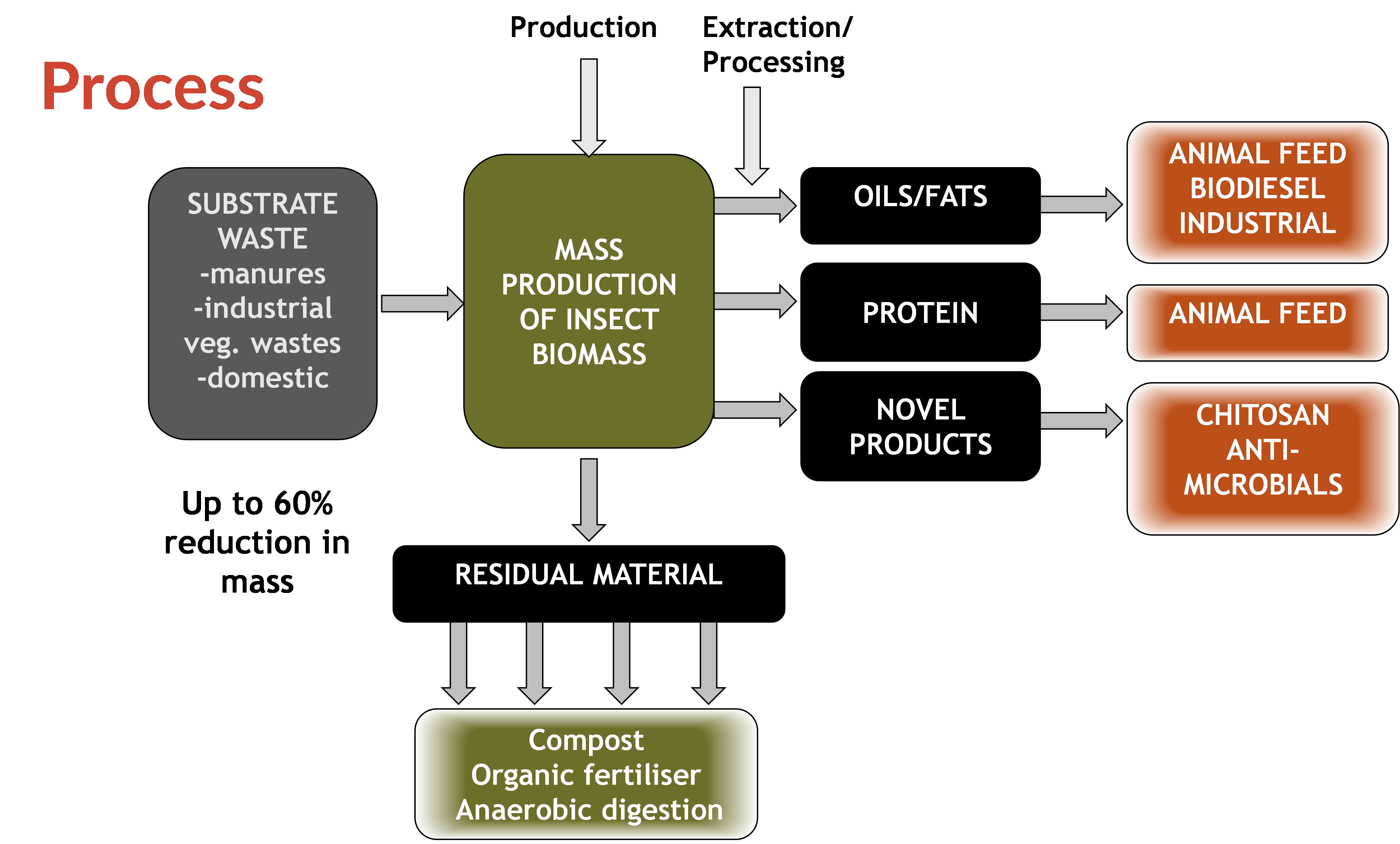
Insect bioconversion can consume traceable biomass waste to provide alternative livestock feed, fishing, and pet foods and even as ingredients for consumer foods.  

Under an alternative application it can also be applied to abstract environmentally hazardous waste streams from farm manures and slurries to sewerage and to upcycle them for non-food and feed products such as biofuels and soil nutrients.

It is a circular economic practice that reduces waste, provides alternative sustainably sourced proteins for the food chain to help overcome the rising pressure to meet consumption for the growing population globally and estimated 250 million metric tonnes of additional protein that will be needed per year in the decades ahead to feed the world. The launch of the new insect research laboratory has seen Fera’s presence grow by over 2,000 sq. ft on a campus that sits at the heart of an agricultural region driving the circular economy and bio-based industry.


We’re thrilled to have been shortlisted for this year’s Business Awards” explains Dr Andrew Swift, Chief Executive Officer at Fera Science.

At Fera we believe in applying innovation and original thinking to protect you, what you eat and the world in which we live and there are few finer examples of our cross-disciplinary and entrepreneurial approach than in the way we have led the world insect bioconversion from York”.

We’re proud to be driving radical and disruptive innovation to address today’s challenges in food security and food safety, environmental  conservation and nature recovery. Our recognition as part of the York awards is a testament to the efforts, purpose, and dedication of all Fera’s employees.

Based in York, with a scientific heritage spanning over 100 years and employing over 450 scientists in the Yorkshire, Fera is a national and international centre of excellence for interdisciplinary investigation and problem solving, with experience in support of public goods across food-agri environment axis and for translation of innovative science into most impactful services to deliver positive change. Around the globe, organisations in over 120 countries rely on Fera to ensure the quality and safety of their products as we are uniquely positioned to address ‘whole system’ of food production in the modern economy.

As one of the three businesses shortlisted for the innovation category, Fera is proud of its Yorkshire base and work with regional, national, and global partners, continually investing and expanding its product and service offerings to not only respond to industry requirements but to also continue to support the local economy by creating high quality employment. Utilising talent from within the region and a programme of regional community engagement and investment in our staff, apprenticeships, PhD students and recruitment at the bench, Fera provides attractive career progression opportunities.

With over 100 entries, the awards have long been a major fixture in the York business calendar, with this year as no exception. The 2022 Awards celebrate businesses across Yorkshire, in 11 categories, who have thrived in their respective sectors despite current economic troubles, long-standing businesses going from strength to strength, firms who have proved their calibre as good employers, and those who put sustainability at the heart of their work.

Fera applies Original Thinking to support sustainable global food production and has a long history of pioneering innovation. In February 2022, Fera launched Enigma; a strategic R&D model established to support continued research, innovation, and knowledge transfer across the agri-food sector through a joined-up approach between Fera and industry partners. Thought to be one of the first research models of its kind in the agri-food sector, Enigma relies on industry collaboration to address exacting industry challenges.

This year Fera has also launched LAND360; a new service to measure, monitor and assess natural capital. Combining data and science, LAND360 is based on three hierarchical levels of service that accurately measures and maps existing land habitat features and models biodiversity, offerings to help farmers, landowners and managers make informed land use decisions in response to Defra’s environmental land management schemes (ELMs), and the drive to manage land in a way that recognises ‘public money for public good’.

Fera has plans to bring further innovative technology to the region under the BioYorkshire initiative. The ten-year programme will accelerate the translation and application of research discoveries into full scale biotechnology applications. As one for the three founding partners, Fera is committed to transforming the UK’s bioeconomy and creating centre of gravity for the north of England and wider UK for the bioeconomy. The project will help drive a new era of bio-manufacturing and farming, reduce carbon emissions, and actively contribute to the UK’s Net Zero ambitions. We estimate that innovation and skills developed through BioYorkshire will add around £1.4bn in GVA to the UK economy, creating 4,000 jobs across Yorkshire and the UK.

Promoting inclusivity, in attending the awards ceremony, Fera’s CEO Dr Andrew Swift will be joined by a cross-section of Fera staff and a selection of our valued regional customers, partners and key suppliers.


How can innovation help improve Food Security?

Open innovation in the agri-food sector is vital to help protect our local and global supply chains against food security concerns, explains Wendy Martindale, Growth Director at Fera. Here, she shares more detail on the challenges and shocks facing UK food security, and how our collaborative research model, Enigma, is helping to improve supply chain resilience.


What are the causes of food security issues?

Brexit, the Covid-19 pandemic, and more latterly the Ukraine war, are current examples of events that have tested the resilience of our entire food supply chain, probably to a greater degree than anything we have seen for over a generation.

Generally, the supply chain has coped effectively with these threats to its sustainability so far. Our trade policy of supplementing domestic production with imports has contributed to our resilience.

But, as the December 2021 UK Food Security Report highlighted, an over-reliance on global trade can leave food supplies vulnerable to global logistical, political and production disruption.


How is the war in Ukraine affecting food security?

The start of the Ukraine war in early 2022 impacted sunflower oil, grain, and fertiliser exports, threatening global food chains. In the UK, this led to increased production and energy costs as well as broader supply challenges, which increased supply chain vulnerability.

These unpredictable, interconnected, and complex challenges have increased the focus on UK domestic food production. At the same time, government policy throughout the western world has been steering farmers towards more eco-friendly approaches as part of the goal to reach net zero and mitigate climate change.

Sustainable farming strategies are known to be inherently less intensive and, some may argue less productive. There are also new challenges created for our producers, not least with restrictions on some of the tools they have relied on for past generations.


Why is innovation so important for reducing food supply chain risks?

Finding the correct solutions to new challenges raised by the agri-food sector must be supported by industry wide, collaborative innovation and R&D. The loss of sector specific levy boards, restrictions on face-to-face meetings during the pandemic, and resource limitations within companies has made this even more necessary.

Finding ways of translating scientific innovation into practical implementation will be crucial to address shortfalls in agri-food research and is where movements, such as Enigma, Fera Science’s partner-led R&D model, will be critical in addressing exacting industry challenges. 

Whatever model is used, research which bridges the innovation gap will be key to ensuring UK agriculture can continue to compete – ultimately protecting the stability and resilience of UK food security.

Learn more about Enigma, Fera’s strategic R&D model, and the benefits to project partners: https://content.fera.co.uk/hubfs/Crop%20Health/ENIGMA/ENIGMA_OVERVIEW%20V2.pdf

Fera provides training on invasive ants and plant pest species for conservation staff in St. Helena

Martina Peters (Head of Conservation) and Liza Fowler (Cloud Forest Invertebrate Specialist) of St. Helena’s National Trust visited Fera on 4th to 5th August 2022 to learn how to identify invasive ants and plant pest species that pose a high risk to the biosecurity of the island in which Fera has been supporting through UKOT Projects under DEFRA funding.

St. Helena is a volcanic island with a subtropical climate in the South Atlantic Ocean. The island has an astonishing array of biodiversity which is threatened due to the introduction of non-native species that may cause a significant negative impact on the ecosystem. The ancient cloud forest in the centre of the island is of global importance as is holds approximately 250 species that are found nowhere else on Earth.

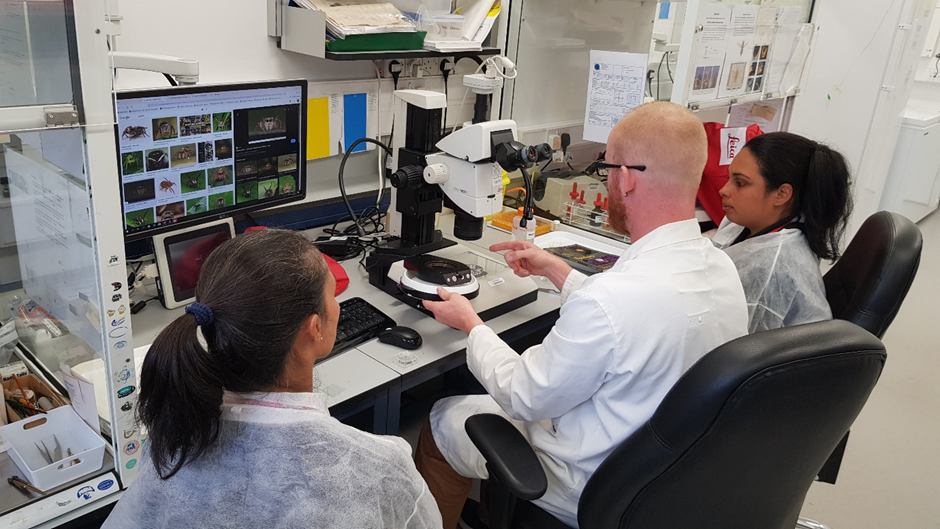
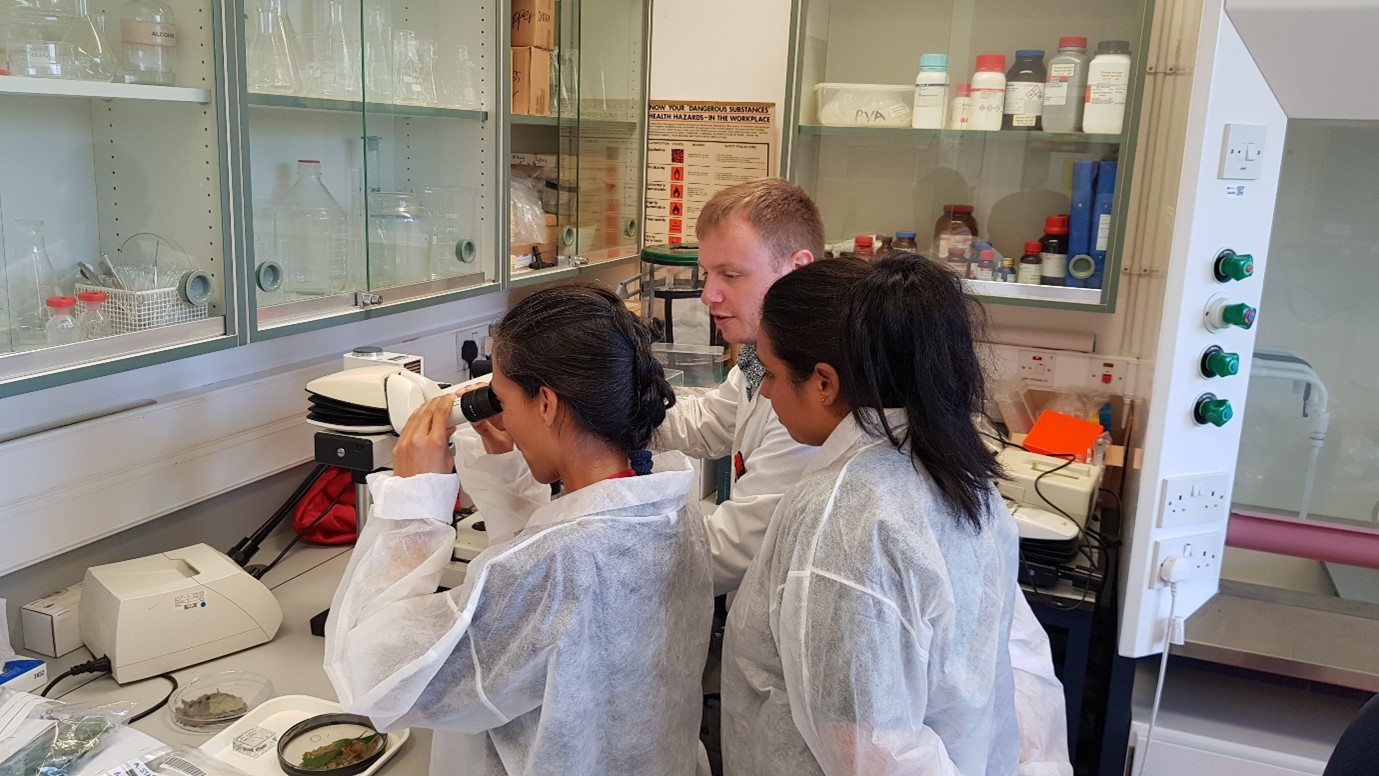
Among the groups of concern that the visitors were taught to identify were ants by Noel Tawatao, spiders and flies by Rob Deady, leaf-mining flies by Charlie Griffiths and eriophyid mite damage by James Thorpe.

Ants are of particular concern as they can have a devastating impact on island ecosystems, for example, the invasive yellow crazy ant on Christmas Island in the Indian Ocean, threatens the endemic land crab fauna, alters rain forest structure and composition, and disrupts ecosystem processes.

Developing the diagnostic capacity of the conservation staff in St Helena will help them identify potentially invasive species so that appropriate action can be taken to mitigate the impact and protect the unique environment and biodiversity of the territory.


Noel showing the visitors from St Helena how to recognise invasive ants


Rob showing the visitors from St Helena how to recognise invasive spiders


Charlie showing the visitors from St Helena how to recognise invasive leaf-mining flies


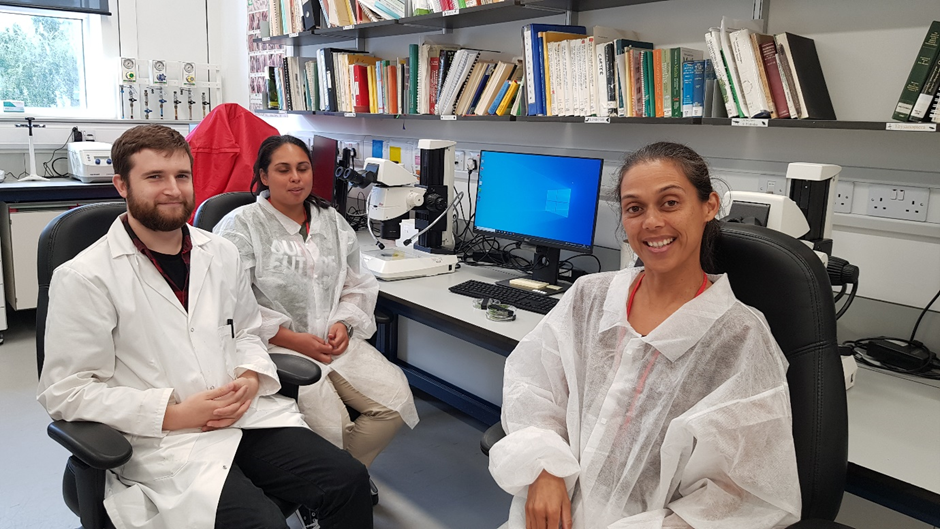
James with Martina Peters (Head of Conservation) and Liza Fowler (Cloud Forest Invertebrate Specialist) from St Helena


Saint Helena, cloud forest on Diana’s Peak © C. Malumphy


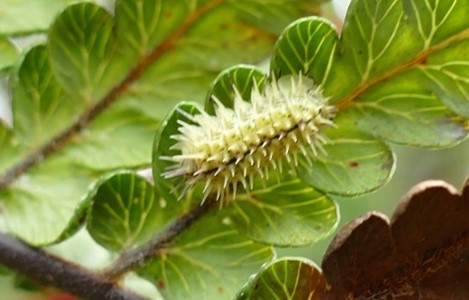
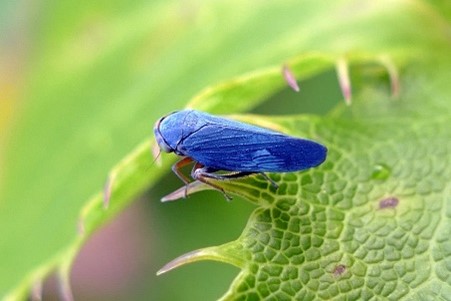
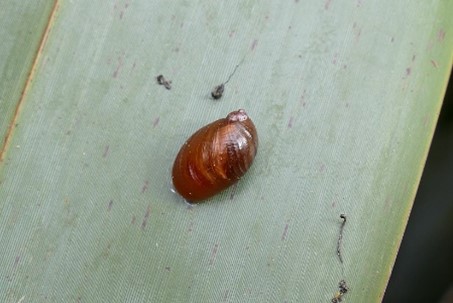
Saint Helena, examples of endemic invertebrates: spiky yellow woodlouse; blue leafhopper; and the blushing snail © C. Malumphy


A Circular Revolution in the Forecast for Aquaculture Feed

A Circular Revolution in the Forecast for Aquaculture Feed

Innovators Future By Insects with strategic partner Fera Science Limited (Fera), winners of WWF and Tesco’s Innovation Connections accelerator scheme award, are working collaboratively with commercial partners to revolutionise the production of aquaculture feed.

The collaborative project will validate Future By Insects’ innovative and sustainable solution which will repurpose organic waste streams and captured Co2 emissions to grow algae as food for insects to produce animal feed ingredients. Hilton Food Group and Greencore, both major suppliers to Tesco, are centrally involved in supporting the project.


Evelyn Peters, Chief Executive of Future By Insects based in the UK, said on learning of the success of their proposal: “The backing of Innovation Connections is crucial to our progression as together with our partners, Greencore and Hilton Food Group, we will be able to work with huge volumes of food waste streams, leading to successful validation of our proposition at scale. We will now be able to build the evidence base that will create commercial viability leading to acceptance and adoption.”


Dr Maureen Wakefield, Principal Scientist, Insect Research Unit, Fera, said: “Fera’s collaboration with Future By Insects will enable them to work with our extensive scientific and practical technical knowledge and our new Insect Research Unit specialising in insect farming.  The new facility will provide large scale trial facilities utilising the huge volumes of organic food waste required to carry out the scaled-up testing to build the evidence base necessary to support Future By Insects project work.”   

“This is one of a number of strategic projects,” Wakefield adds, “that Fera will be delivering over the coming year, all with the aim of kick-starting the agri-food manufacturing sectors to adopt insect farming technology.  Our aspiration is to showcase its ability to valorise waste streams as well as reduce the  volume of food waste going to landfill.”   


Both Future By Insects and Fera recognise the importance of the involvement of Hilton Food Group and Greencore, due to their scale and position in the market. Both can contribute hugely to Tesco and WWF’s ambition through Innovation Connections to halving the environmental impact of every household’s shopping basket by the acceleration of the adoption of new technologies at scale.


Nigel Edwards, Group CSR Director of Hilton Food Group, lead supplier of protein products to Tesco as part of its international supply chain, says: “Hilton Food Group  has chosen to work with Future By Insects and Fera as they offer a credible scale up solution for insect derived fish feed in aquaculture as well as extensive scientific expertise. This project will validate Hilton’s ambition to lower environmental impacts compared with traditional feeds, measured in terms of CO2, water use, circularity and biodiversity.” 


Greencore’s Group Sustainability Manager, Norman Watson also confirms their collaboration with the project: “We will provide food ingredient by-products from our production sites to be trialled as insect feed, thereby creating a high-value product from our food by-product waste streams aiding the creation of a closed loop system within our fish product related supply chain. This project works directly with our ambition to play a positive role in the future of food, and to deliver a more sustainable, equitable and inclusive food system.”


To find out more about Fera's Insect services please follow this link: https://www.fera.co.uk/insect-bioconversion-reforming-the-food-system

Fera Science launches £1m Laboratory for Insect Bioconversion at York base

Fera Science launches £1m Laboratory for Insect Bioconversion at York base

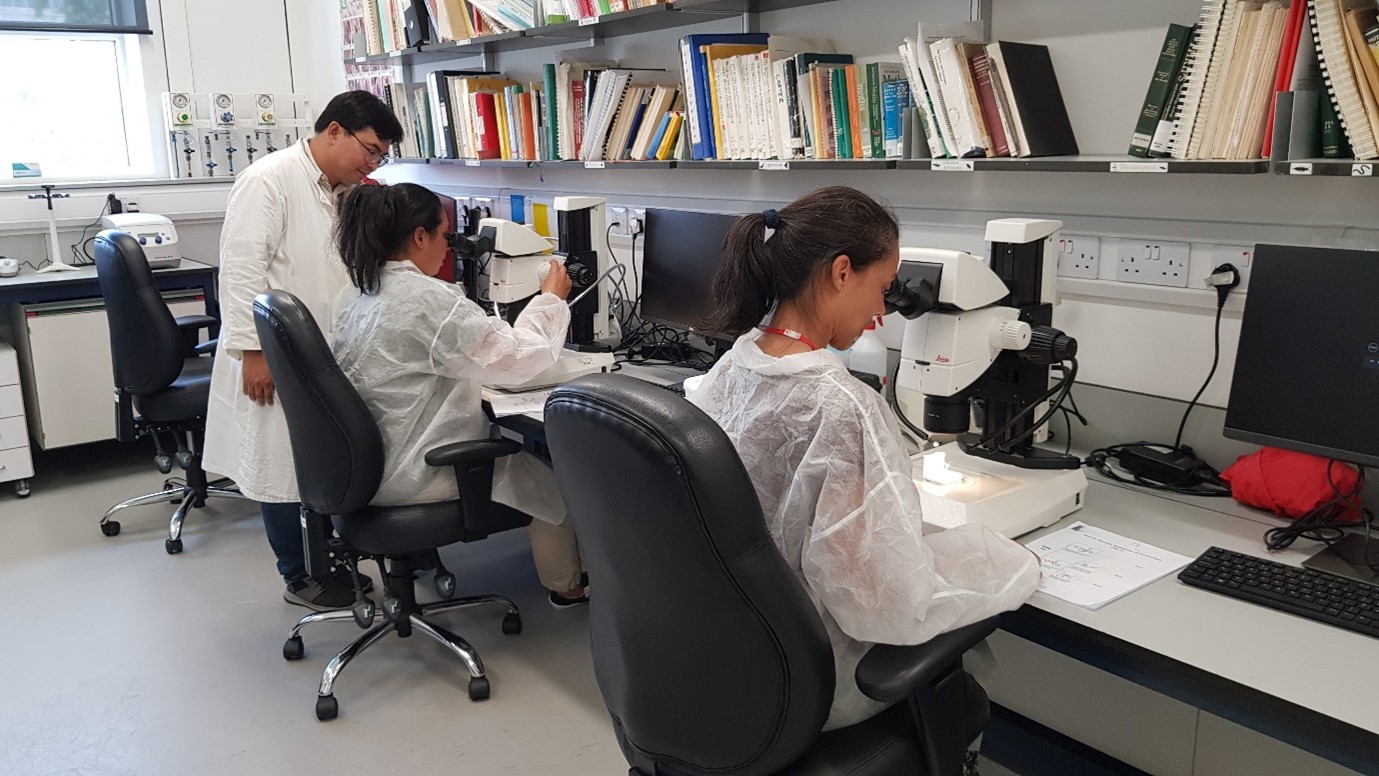
Fera Science Ltd (“Fera”), a pioneer in expert agri-food and environmental science services, is delighted to announce the opening of its specialist insect laboratory today at its York Biotech Campus (YBC) location. The £1m expansion involved converting a former storage unit on site into a purpose-built insect research unit, increasing Fera’s presence at YBC by over 2,000 sq. ft.

This expert research and development (R&D) facility will support the rapid growth of insect bioconversion to upcycle biomass residues into valorised products. Fera’s R&D services will help a variety of industries to evaluate the feasibility and scale up processes by which they can best adopt the technology.

Fera has led insect bioconversion R&D in the UK and EU for the past 10 years. The laboratory, which is the first of its kind in the UK and one of the first in Europe, enables Fera to help meet the needs of global clients from across the food industry by expanding the scope and scale of its current insect services to ‘twin’ the process of insect bioconversion at factory production scale.

Insect bioconversion is the process of feeding insect biomass residue to create valorised products, such as high quality proteins and oils, packaging materials or soil nutrients. It is a circular economic practice that reduces waste, provides alternative – sustainably sourced - ingredients for animal feed. Most of Fera’s work has focused on developing this application with black soldier fly larvae for a multitude of reasons which lend themselves to an efficient production process and yielding product which is protein rich, contains a good balance of essential amino acids, minerals and fats - highly suitable for feeding to monogastric animals (such as poultry, pigs and fish).

Fera is able to advise its clients on the cost reductions as well as optimising the circular economy benefits of insect bioconversion in line with net carbon zero objectives and the UN Sustainable Development Goals (UNSDGs). The laboratory will also enable collaborations with universities, start-ups, insect farms and associated national and international regulatory authorities, including the Department for Environment, Food and Rural Affairs (Defra) and the Food Standards Agency.


Dr Andrew Swift, Chief Executive Officer at Fera Science said:

“Today’s launch of our specialist insect laboratory is an important step in the delivery of expert support from Fera to help the food production industry and its stakeholders, in both the commercial and public sector, to respond to the opportunity this technology presents.

“The rising pressure to meet consumption for the growing population globally estimates that more than 250 million metric tonnes of additional protein will be needed per year in the decades ahead. This puts immense pressure on our current animal feed protein sources such as soy and fishmeal which are derived from unsustainable sources. Insect bioconversion presents one route to provide sustainably sourced protein into the food chain to help overcome this challenge. Under a circular economy, this technology can  reduce biomass waste through consumption and conversion into high quality protein for animal feed as well as other bi-products of high value to food production."


Tamara Finkelstein, Permanent Secretary at Department for Environment, Food and Rural Affairs (Defra) said:

“I am delighted to see Fera opening this state-of-the-art insect research laboratory. This is a critical time for innovation in biotechnology and the insect unit has the potential to reduce our impact on the environment, making progress towards a more circular economy.

“The breadth of national and international partners involved will help ensure its success and demonstrates Fera’s international reputation for taking scientific innovation to new markets.”


About Fera:

Fera is a national and international centre of excellence for interdisciplinary investigation and problem solving across plant and bee health, crop protection, sustainable agriculture, food and feed quality and chemical safety in the environment.

We create and deliver integrated, innovative and expert research services and products for our partners in crop protection, chemical and animal health companies, as well as food producers and growers, manufacturers, distributors and retailers. We also support and work closely with governments, academia and leading research organisations.

Fera's Insect Services here: https://www.fera.co.uk/insect-bioconversion-reforming-the-food-system