Chloe Acland

Fera Science Ltd. and The Ministry of Public Health sign cooperation agreement on Food Safety and Environmental Health

Fera Science Limited (Fera Science) and The Ministry of Public Health (MoPH) sign cooperation agreement on Food Safety and Environmental Health


On Tuesday 12th April 2022, Fera Science Ltd signed an agreement with the Qatar Ministry of Public Health (MoPH) to promote scientific and technical cooperation on food safety and environmental health.


Signed by Richard Boucher, Head of Science and Innovation Network, British Embassy in Doha on behalf of Fera Science, and Public Health Department Director Sheikh Dr. Mohammed bin Hamad Al Thani, on behalf of MoPH, the agreement includes a cooperation in food safety research, particularly food contaminant and risk management analyses, analyses of products of animal origin, specialised tests of unforeseen toxins, food fraud detection techniques, dissemination of scientific research and development results and professional consultancy services in food safety and environmental health.


"We are pleased to sign this important agreement with the MoPH in the State of Qatar with the aim to develop and strengthen fruitful cooperation between the two sides, especially in the field promoting the quality and safety of food and environmental health in general or during major sporting events and particularly the 2022 FIFA World Cup Qatar, based on our previous experiences at the 2012 London Olympics.” Explains Fera Science CEO, Dr. Andrew Swift.


Sheikh Dr. Mohammed Bin Hamad Al Thani describes "the signing of the agreement with Fera Science Limited comes within the framework of the MoPH's keenness to apply the best international standards and practices in the field of food safety, including laboratory services, risk analysis, control standards’ development, supervision and regulation. It also serves the implementation of the Qatar Public Health Strategy 2017-2022 and the National Health Strategy 2018-2022. The agreement will also support the response of Qatar’s MoPH to food safety and environmental health emergencies."


Ms. Wassen Abdullah Al-Bakr, of Food Safety and Environmental Health Department Director, MoPH, explained that the agreement was a contribution to the enhancement of food safety in the State of Qatar to serve the national strategy for food security, through a series of scientific events and activities carried out in cooperation with Fera Science.


Based on the agreement, the MoPH will implement the HorizonScan solution, owned by Fera Science Ltd., and its relevant supply chain safety assessment services,” she added.


Reference: https://www.moph.gov.qa/english/mediacenter/News/Pages/NewsDetails.aspx?ItemId=513

Insects, reducing food waste and providing a future source of valuable animal feed in the Caribbean

The region’s population continues to grow, and so do the piles of organic waste from our farms, markets, restaurants, hotels, and food manufacturers. This is creating health, environment, and climate risks. The Caribbean Food and Agriculture Organisation of the UN (FAO) estimates that 1/3 of all food produced goes to waste with Latin America and the Caribbean generating the highest food waste carbon footprint in the developing world, a staggering 78 million tons annually.

At the same time, all commercial animal feed (mainly corn and soya) is imported into the region. Indeed, poultry feed in the Caribbean can amount to as much as 80% for broiler chicken production, leading to higher retail costs to consumers and many poultry producers going out of business.

The FAO working with its partner Fera Science Limited (Fera) has completed a regional survey of organic waste across Barbados, Jamaica, Grenada, and Trinidad and Tobago to assess the potential of insect farming as a solution to the twin problem of increasing volumes of organic wastes, and the lack of access to affordable animal feed.

Traditional animal feed material is based on soybean, which carries a heavy environmental impact - 75% of soy used in animal feed, fuels climate change through loss of topsoil and a direct cause of deforestation associated with sensitive ecosystems such as the Amazon biome. Access to a sustainable and affordable protein supply for animal feed is therefore an urgent challenge.

Recent studies indicate that meal produced from insects, can be an excellent replacement for fishmeal or soybean meal in animal feed as insects are rich sources of macro and micronutrients. Additionally, selected insect species can efficiently convert organic waste (biomass), through their natural ability to upcycle waste material, into high-quality products, which can be used in agriculture and animal feed industries.

Insect farming therefore presents an economical and environmental solution to the growing levels of waste and the need for sustainable proteins. Infact it is now widely regarded as one of the key solutions to reducing waste in the environment and creating sustainable and cheap sources of animal feed. So much so that the farming of insects, and the use of insect meal is already permitted in many countries across the world and is actively being adopted with commercial operations in North America, throughout Europe, Singapore, Malaysia, China, Indonesia, Australia, and the UK.

Insect farming therefore has the potential to provide a solution to the twin problem facing the Caribbean the volumes of organic wastes, and the lack of access to affordable animal feed. By using locally sourced by-products and organic residues a regional supply of high quality, comparable protein and oils for the poultry and fish industry could be produced shielding farmers and consumers from volatile feed prices. Small holders, communities and local famers organic waste could be economically viable as a use by local waste companies improving regional circular (bio)economy through the insect’s ability for bioconversion of the by-products and organic residues.

The FAO study has determined that if insects could be farmed and used to constitute 50% of diets for poultry across the Caribbean, this would displace millions of tonnes of soy and other unsustainable sources of protein such as fishmeal from ocean ecosystems and significantly reducing the highest food waste carbon footprint in the developing world.  It has the potential to be used as 100% of the poultry feed across the Caribbean should we be able to harness the full potential of organic wastes across each island nation.

As with any innovation for this to be successfully adopted in the Caribbean there is a pressing need for education, technology demonstration, and training. To that end, the FAO in collaboration with Fera, the University of West Indies, and other NGOs supporting composting, waste valorisation, and community engagement on making better use of food waste in the region. And are planning to run a regional pilot to show case the value of insect farming and provide the catalyst for a series of community projects across the region and create sustainable animal feed from our wastes. 

Damian Malins, Fera Science Limited said “We are very excited to be working with our partners. This will establish insect farming in the region, provide training and workshops for farmers, communities, Ministries, and other interested stakeholders to create a best practice for the future insect farmers.  It will also put in place the principles and guidelines of it being adopted as a community solution to reducing our wastes and creating an affordable, sustainable animal feed”.

For more information on Fera's Insect Services, click here

Fera Science to launch £1m Insect Laboratory at Yorkshire base

Fera Science has invested £1m into creating a UK ‘first of its kind’ insect research laboratory at its base at leading bioscience hub, York Biotech Campus (YBC).

The expansion involves converting a former storage unit on site into a purpose-built insect research unit and will see the business’s presence at YBC grow by over 2,000 sq. ft.

The laboratory, which is also one of the first in Europe, will allow Fera to upscale its current insect services and help meet the needs of clients from across the food industry by being able to show insect bioconversion at scale and replicate the nature of insect farming in a factory.

Insect bioconversion is the process of feeding insects waste to create additional materials, such as protein or fertiliser, and is a hugely sustainable practice that reduces waste, provides alternative food for animal feed and reduces the environmental impact of sourcing for protein in already depleted areas, ultimately helping to combat climate change.

Services that Fera will be able to offer its clients include advising how companies can benefit from insect bioconversion to demonstrate their commitment to sustainability, as waste that usually ends in landfills can be used to benefit the circular economy instead, as well as using their waste to create an additional revenue stream.

The laboratory will not only support Fera’s clients, but will also enable collaborations with university partners, start-ups, insect farms and support policy and regulatory authorities within the Department for Environment, Food and Rural Affairs (Defra).

Work on the unit started on site this month, with operational launch of the laboratory set for July 2022.

In line with the launch of the new laboratory, Fera will also be expanding its team and is looking to recruit six team members across the coming months.

Damian Malins, Venturing Projects Director at Fera Science said: “We’re extremely excited about opening our new insect research laboratory, as it means we’re able to deliver far more to all our clients including commercial and public sector, as well as research partners.

What’s even better is that we’re growing our base at YBC. The campus sits at the heart of an agricultural region that is driving the circular economy and bio-based industry. The collaboration it encourages is fantastic, and through connections with other tenants and near neighbours we have already established links to food producers, community groups and agri-businesses who wish to explore the potential of insect farming as part of their net carbon zero objectives.

Fera Science has plans to bring further innovative technology to the site and the region under the BioYorkshire initiative. Working alongside the University of York and Askham Bryan College, proposals include establishing two new facilities including the research cube, a highly automated control environment supporting Fera’s work into plant and insect farming research, as well as a packaging hub.

Find more about Fera's Insect Services here: https://www.fera.co.uk/insect-bioconversion-reforming-the-food-system

SETAC Europe 2022

SETAC Europe 2022

Join us at the event!


The year 2022 looks encouraging for the SETAC Europe 32nd Annual Meeting, which still aims to take place from 15–19 May as a fully-fledged, in-person meeting in Copenhagen, Denmark, while featuring limited virtual components for remote participants. 

The Society of Environmental Toxicology and Chemistry (SETAC) is a not-for profit, global professional society established in 1979 to provide a forum for individuals and institutions engaged in education, research and development, ecological risk assessment and life-cycle assessment, chemical manufacture and distribution, management and regulation of natural resources, and the study, analysis, and solution of environmental problems.


Fera will be exhibiting at the event in Copenhagen on stand no.55 to present and discuss with other delegates the work we do and the original thinking we have to bring to the scientific world.


Please contact [email protected] to book a meeting during the conference.


Ecotoxicology

Fera helps commercial companies to accurately assess the toxic impacts of plant-protection products and veterinary medicines on a range of ecosystems and species.


Environmental Fate & Metabolism

Our regulations-compliant environmental fate studies provide essential data on the fate and behaviour of pesticides and other chemicals in the environment.


Efficacy Services

Fera provides efficacy testing on any scale to support the registration and development of new plant-protection products.


Analytical Chemistry

Fera offers a wide range of analytical services using sophisticated analytical instrumentation. We have the expertise, personnel and equipment to provide clients with assistance in analytical method development in support of environmental toxicology studies, biotechnology, manufacturing support, compliant sample analysis, formulated product analysis, polymer analysis, analytical method validation to GLP requirements and surfactant analysis.


Click here to see more about our Chemical Regulation services and what else we have to offer.


We hope to see you there!

Groundswell 2022

Groundswell 2022

Join us at the event!

The Groundswell event provides a forum for farmers and anyone interested in food production or the environment to learn about the theory and practical applications of Conservation Agriculture or regenerative systems, including no-till, cover crops and re-introducing livestock into the arable rotation, with a view to improving soil health.


Fera will be exhibiting at Groundswell and taking with us some of our most recent launches; LAND360 and Enigma.


Read below to find out more information on our current and latest work...


Research & Development

With over 100 years' experience of delivering pest and disease identification services to a wide range of commercial growers and Government departments, both in the UK and overseas, we understand the needs of our customers.

Our R&D is delivered over three sections, Crop, Pest Management and Pathology


Plant Clinic

Fera's Plant Clinic is the largest in the UK. Our work supports healthy plants and crops, increasing sustainable food production and protecting the environment.

We can identify plant pests and pathogens found in arable crops, vegetables, trees, ornamental plants, protected edibles, seeds, soft fruit, turf and water.


Grower Support Tools

Fera has developed a range of tools, online databases and technology to support farmers and growers, to help the agricultural industry produce more crops to feed an ever-growing population more efficiently whilst using fewer resources and pesticides.


Insect Monitoring

Our insect monitoring capabilities provide the information to assess virus transmission risk helping growers to target insecticide applications more accurately to reduce costs and waste, optimise resources and improve yields.


LAND360


Click here to read about our latest launch of a new land assessment service designed to measure, monitor and asses natural capital.


Enigma


Enigma is Fera’s strategic R&D model established to support continued research, innovation and knowledge transfer across the agri-food sector through a joined-up approach with Fera and industry partners. 

Click here to read more.


We hope to see you there and answer any questions you might have!

Institute of Animal Technology Congress 2022

IAT Congress 2022

Join us at the event!


The IAT was founded in 1950 and is the foremost professional body in the field of Animal Technology.


The Institute of Animal Technology annual conference is being held 29th March-1st April 2022.

This years theme is "Animal Technologists – the key workers for medical research"


Attracting over 400 delegates from the UK, Europe and the USA, delegates can enjoy a varied selection of scientific presentations, workshops and posters as well as the largest trade exhibition of its kind in the UK.


Join us at the event where we will be talking to you about our services and offers to help you enhance your animal health programme with Fera.


See how we can help you...


Panoptic Animal Health Package

Get a full view of your animal health monitoring and facility requirements withFera’s Panoptic Package.


Perfectly tailored to any facility requirements

UK-based state-of-the-art laboratory with an in-house team of experts

Full suite of customisable programmes and panels

Extensive non-sacrificial panel options

Fully supported implementation, interpretation and next steps


Consultancy Services

We understand that the development of an effective health monitoring strategy and testing process is highly complex, and today’s facility managers and Named Veterinary Surgeons are required to manage an increasingly complex environment.

Fera provide a consultancy service to support you and help mitigate the risk of potential outbreak mid-way through a research project, all whilst maintaining industry best practices.


Find your bespoke solution

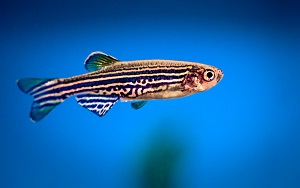
Fera offers customised microbiological monitoring of multiple species including mice, rats, hamsters, gerbils, guinea pigs, rabbits, with zebrafish coming soon!

Animals or individual samples can be submitted to our UK-based health monitoring laboratory for necropsy, bacteriology, parasitology, and molecular investigations. Design your panel or let us do it for you from our list of available assays below to begin your fully customisable service.


Check out our Animal Health Monitoring page on the website to find out more information and hopefully we will see you soon at the IAT Congress 2022!


SOFHT Innovation Day 2022

SOFHT Innovation Day 2022

Join us at the event!


The Society of Food Hygiene and Technology (SOFHT) is an independent consortium of food industry specialists set up to keep members advised of the current hygiene and technology issues through providing technical support, training and topical information as well as a vital forum for networking and sharing best practice across the entire food chain.


SOFHT, in partnership with Fera Science, will be hosting an Innovation Day that will bring together food industry suppliers and services with innovative solutions that will be of interest to food manufacturers, retailers and other service providers.


The conference programme will provide information on innovation in cleaning and disinfection, food, microbiology, pest control, technology and training, in a mix of key presentations and breakout sessions enabling delegates to select those areas of special interest to their business needs.

In addition, there will be an exhibition giving delegates the opportunity to talk about the innovations presented with the suppliers and manufacturers.


Read below to find out more about our Food Safety ad Insect Industry Services we have to offer...

 

Authenticity Testing

With the food industry increasingly subject to scrutiny, testing to ensure compliance with food safety regulations, protecting public health and supporting traceability is a must

Food Packaging Analysis

Food contact materials testing is used worldwide to make sure that food is not contaminated by any of the products it comes into contact with. The term 'food contact material' describes any material that may come into contact with a foodstuff.

Food Safety Support Tools

Keeping food safe and secure as it moves through the supply chain has always been a concern within the food industry - To make good decisions in challenging times, food industry professionals need accurate information that’s current, insightful and accessible, be pro-active by using Fera's HorizonScan and BSI SCREEN's software system to keep you ahead of the game. Food recalls can cost millions of pounds and can devastate a company's reputation.

Shelf Life Testing

Our experts can develop and carry out a standard microbiological testing method to assess the bacterial content of food and beverage products as well as feed products to determine their use by date as well as associated hygiene or product practices.

Contaminant Testing

Our experts focus on the scientific research relating to intentionally added food components and to those arising from chemical changes during food processing, bioactive chemicals and natural toxicants.

Veterinary Medicine Residue Testing

The main objective of the team is to develop, validate, and implement improved methods for (a) detecting and (b) determining the fate of drugs residues (both veterinary and human) in food, feed and environmental samples.

Pesticide Residue Testing

Fera are the UK National Reference Laboratory (NRL) and have established a reputation for implementing new technologies, developing and validating new methodologies and extending the scope of existing methods in order to include new pesticide/matrix combinations across cereals and feeding stuff, fruits and vegetables & single residue methods. 


Book your tickets to the event now!

We hope to see you there.

Fera Launches New Land Assessment Service

A new service to measure, monitor and assess natural capital has been launched by Fera.

Combining data and science, LAND360, accurately measures and maps existing land habitat features and models biodiversity offerings to help farmers, landowners and managers make informed land use decisions.

With the introduction of the environmental land management scheme (ELMs) and the drive to manage land in a way that recognises ‘public money for public good’, it’s clear that landowners need to understand the extent of the natural capital they have,” explains Guy Thallon, Fera strategic business development manager.

This baseline understanding will mean opportunities can be identified and realised to help secure businesses that are economically and environmentally sustainable.

However, to achieve this, sourcing accurate data and using the latest science is fundamental, hence the reason for launching LAND360,” adds Mr Thallon.

Based on three hierarchical levels of service, LAND360 uses the expertise of Fera’s multidisciplinary scientists, alongside the latest software and scientific assessment techniques to map alternative land use scenarios bespoke to each business.

LAND360 Mapping+ involves the analysis and interpretation of high-resolution satellite imagery to create a detailed baseline of natural capital resources,” says Mr Thallon.

Scoring+ takes this a step further and uses proven methods to assess the quality of natural capital using the insight gained through Mapping+ combined with more detailed ecological and biodiversity scoring.

Finally, Ecosystem+ is a bespoke consultancy service where land use proposals are developed in conjunction with land managers, Fera scientists and ecologists to identify opportunities for future land use and revenue streams. These recommendations are based on scientific data gathered on available natural capital, business performance and market options,” he adds.

Research scientists at Fera, have a long track record of supporting government and policy in monitoring and evaluating agri-environment schemes designed to support environmental sustainability.

This puts us in a great position to offer this service at a time when there’s great uncertainty around support payments,” says Mr Thallon.

By getting started on this now, once the detail of schemes is known and roll-out is unveiled, sites that have undertaken an assessment will be in a great position to mobilise their plans and begin managing land for the future.


To find out more about LAND360 visit the website https://www.fera.co.uk/land360-land-management


New R&D Model Launched by Fera


Fera has launched a new R&D model to support continued research, innovation and knowledge transfer across the agri-food sector.

Enigma has been established to find end-to-end solutions to pertinent industry challenges.

Speaking at the launch of Enigma, Guy Thallon, Strategic Business Development Manager at Fera, said this was an exciting initiative for the business at a time of great change for agriculture.

There is no getting away from the fact that the pressure on global food systems is intensifying. The global population continues to increase, and the risks associated with a changing climate become ever more pressing. Our food production systems must therefore be robust to withstand this challenge.

However, there are still huge gaps in R&D across the agri-food sector and this is what Fera want to help address through Enigma projects,” he adds.

Mr Thallon explains that knowledge exchange between Fera scientists and industry partners is a crucial element of Enigma to strengthen the connection between science and practical implementation. 

Collaboration is key to the success of these projects. At Fera we’re fortunate enough to have access to a team that deliver world-class science and have a strong alliance with leading organisations internationally that can deliver innovation.

It’s this knowledge, experience and expertise that we want to share with industry partners we work with to help build sustainable food production systems that are truly fit for the future,” he adds.

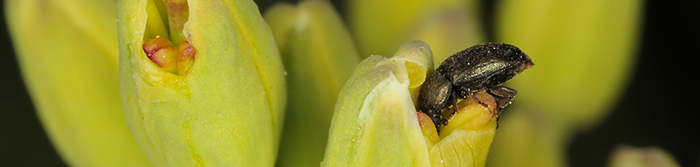
The first Enigma project to launch, which will be co-funded by industry partners, will investigate Wireworm, a pest that affects potatoes and carrots, and increasingly other crops such as cereals, field beans, sugar beet, onions and maize.

The pattern of wireworm damage is changing, however the industry is yet to understand why and how these damage patterns are altering,” explains Larissa Collins, Principal Scientist of Enigma I and Entomology Team Leader.

Fera has identified that R&D is required to understand in greater detail the lifecycle of wireworm to enable producers to successfully use Integrated Pest Management (IPM) techniques to control the pest. Further research into the identification of wireworm species is also required.  

We are therefore putting a call out to aligned industry partners who would be interested in co-funding this project or future Enigma projects to start moving the needle in vital research areas,” concludes Ms Collins.

Find out more about Enigma: www.fera.co.uk/our-science/enigma-research-model

Potato Review Announces Winners for the National Potato Industry Awards 2021

The competition was strong at this year’s National Potato Industry Awards with a large number of finalists being shortlisted for the environmental category. We would like to congratulate A.H. Worth Limited, the deserving winners of the category, along with the other finalists.

Fera’s submission for this year’s award focussed on the fantastic work that the in-house Nematology team have done to develop a new commercial test that can provide valuable management information on soil health and the wider cropping system.

 The 'Nematodes as bio-indicators of Soil Health’ analysis uses Fera's expert identification capabilities to classify nematodes into functional groups that go beyond the traditional plant pathogenic species; including fungivores, bacterivores and predators.

The balance and structure of these functional groups in a soil sample can provide significant insight into the impact — and effectiveness — of management practices on soil health and help support decisions about cropping rotations, cover crop mixes and nutrient use.

In the first season of offering, Fera's Nematodes a bio-indicators of Soil Health analysis has provided insight into the effectiveness of nutrient regimes, highlighting the need for slower release fertiliser and has also informed the longer-term cover crop mix as part of a multi-year IPM strategy. The outputs from the analysis can also help to provide valuable information on soil biodiversity and ecosystem health, which can be used to evidence best practice and environmental stewardship.”

Fera Science would like to congratulate Simon Day at A.H. Worth Limited for winning the National Potato Industry Awards under the #Environment category this year, celebrating their role as an Indicator and Innovation Farm in the M&S Farming with Nature programme within which Fera Science are a science delivery partner.

Fera would like to thank the other organisations who are involved in this award-winning project including Marks & Spencer Food, Game & Wildlife Conservation Trust, Manor Fresh Ltd and Sustainable Soil Management Limited. We were pleased to host colleagues from A.H. Worth and Manor Fresh Ltd. at our table for the lively awards dinner- an exciting night of meeting likeminded individuals- each with a passion for working towards a sustainable future across agriculture and food production. 

If you would like to find out more about Fera’s potato expertise, click here to find out more